


Your roof lightbar switches on. Every LED appears to work. The controller responds normally. Yet someone standing behind the vehicle can barely see the warning signal.
How can a perfectly functioning lightbar still leave part of your vehicle difficult to recognise?
The answer often has nothing to do with electrical failure. Vehicle bodywork, roof equipment, viewing angles and the way the vehicle operates can all affect what an approaching person sees.
For Australian fleet managers dealing with roof lightbar visibility problems, this distinction matters. Replacing an expensive lightbar will not necessarily fix a warning signal that the vehicle itself obstructs.
Let’s examine a realistic workshop scenario and how to identify the actual cause before spending money on replacement equipment.
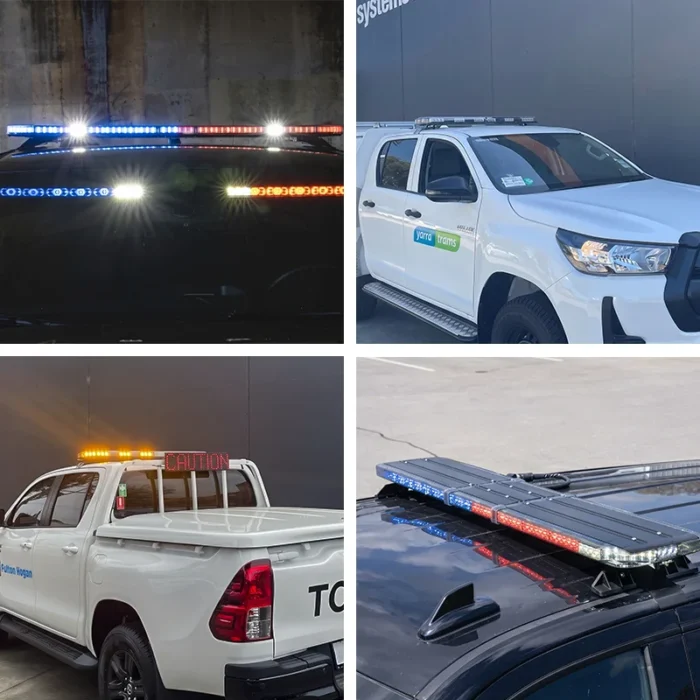
Vehicle bodywork and roof equipment can affect the visibility of an otherwise functioning warning lightbar.
The Workshop Test That Reveals the Problem
Imagine a roadside maintenance truck returning to its depot after a roof-rack modification. The amber warning lightbar operates exactly as it did before the changes.
From directly in front, the warning signal looks prominent. Move towards the rear quarter and the light becomes less noticeable. Walk further behind the truck and the upper edge of the service body conceals part of the lightbar.
Nothing has failed electrically.
The vehicle’s new configuration has changed the available sightline.
This hypothetical example shows why vehicle warning light visibility needs a different troubleshooting approach from a faulty wiring connection or damaged LED module.
A workshop technician could replace the lightbar and discover that the same obstruction affects the new product. The correct diagnosis starts with identifying where the signal disappears and what sits between the warning light and the observer.
What Actually Makes a Warning Light Disappear?
A warning lightbar does not create an identical visual signal at every possible viewing position. The lamp’s optical design determines how it distributes light, while the vehicle determines which parts remain visible.
Four conditions commonly explain the difference.
The vehicle blocks the line of sight
Tall service bodies, canopies, enclosed truck bodies and raised equipment can conceal roof lighting from particular angles.
A cab-mounted lightbar may appear prominent from the front but sit below the apparent roofline of a larger body when viewed from behind.
This can occur even when the installation follows the product manufacturer’s mounting instructions.
Roof equipment creates a shadow
Ladders, racks, signage, aerial assemblies and other accessories can occupy space around the lightbar.
The important question is not simply whether a rack exists. It is whether its normal load interrupts the sightline to the relevant warning modules.
A ladder may block more of the signal when carried in one position than another.
The operating configuration changes
Vehicles do not always work with every door closed and every attachment stowed.
A recovery truck may raise its tray. A service vehicle may open a tall rear door. A maintenance truck may deploy equipment near its roofline.
Those changes can affect how approaching road users see the warning system.
The optics do not provide equal output at every angle
A lightbar’s housing can be visible without every LED module directing the same light intensity towards the observer.
Front-facing, rear-facing and corner warning modules may have different optical characteristics.
That is why a manufacturer’s description of wide or 360-degree warning coverage should not be interpreted as a guarantee that the completed vehicle delivers identical visibility from every direction.
Read the Symptom Before Choosing a Remedy
The missing angle often tells an installer where to investigate.
| What the observer notices | Possible cause | What to investigate |
| Strong front signal, weak rear signal | Service body or cab-to-body height difference | Rear sightline and body obstruction |
| Signal disappears near one rear corner | Rack, accessory or directional optical coverage | Obstruction and lightbar configuration |
| Visibility changes when doors open | Door or equipment movement | Normal working positions |
| Signal looks weak from several directions | Dirty lens, inappropriate mode or equipment issue | Cleaning, controller settings and product condition |
| Signal varies unexpectedly over time | Possible electrical or control fault | Professional electrical diagnosis |
This table helps separate a physical visibility problem from an actual equipment malfunction.
If the LEDs flicker unexpectedly, fail to illuminate or behave inconsistently, the technician should also investigate the electrical system. A blocked signal and a faulty signal can sometimes occur together.
How to Check Visibility Without Creating Another Hazard
The most useful assessment takes place in a controlled depot or other suitable private work area with permission to operate the warning equipment.
Do not stop on a live road or deliberately expose workers to traffic simply to test a lightbar.
Position the vehicle in its normal working configuration and ask a competent observer to assess the relevant approach directions at appropriate viewing positions.
Use the following four viewpoints as a diagnostic starting point:
Front: Can the observer recognise the warning signal without roof equipment concealing the active modules?
Rear: Does the cab, service body or loaded equipment interrupt the view?
Left side: Are the side-facing modules visible, or does an accessory conceal them?
Right side: Does the same problem occur, or is one side affected more strongly?
Then repeat the relevant checks after placing normal loads or equipment into their typical operating positions.
A photograph can help document an obstruction, but photographs and videos do not reliably measure warning-light intensity. Camera exposure, frame rate, flash timing and viewing conditions can make working LEDs look weaker or temporarily invisible.
Never use a single photograph as proof of compliance.
The inspection should follow the applicable vehicle requirements and any manufacturer-prescribed test procedure. Keep observers at a safe distance and avoid staring directly into high-intensity warning lights.
Why Daylight and Night Checks Can Give Different Results
A warning signal may appear very prominent at night but become harder to distinguish in bright daylight.
Ambient lighting changes the contrast between the lamp and its surroundings. Dirty lenses, glare and the viewing direction can also affect how clearly a person recognises the flashing signal.
The answer is not automatically a brighter product.
First, confirm that the existing equipment is clean, operating in its intended mode and free from physical obstructions. Then assess whether the product’s optical performance suits the application.
A high visibility emergency light bar still needs a suitable mounting position and an appropriate configuration.
For authorised vehicles, review any relevant day/night operating modes and manufacturer instructions. Do not change flash patterns or warning colours merely to make the system appear more noticeable during a casual test.
When Does Supplementary Warning Lighting Make Sense?
Suppose a truck’s roof lightbar remains partly hidden from the rear because of its service body. Raising or repositioning the main unit might not be practical or permitted.
In that situation, properly selected supplementary warning lights may help address the identified viewing gap.
Australian Warning Systems offers directional LED warning products that installers can assess for appropriate front, side or rear applications.
However, supplementary lighting is not automatically the right answer.
The installation must account for permitted colours, mounting locations, optical direction, switching and compatibility with the existing warning system.
A directional LED designed to face rearward does not necessarily replace the primary roof lightbar. Likewise, a work light or reversing lamp should not be treated as an equivalent flashing warning device.
For emergency vehicle light bars Australia, operators should also confirm that any supplementary equipment suits the vehicle’s authorised warning configuration.
The goal is a coordinated system that resolves the specific visibility problem rather than simply adding more flashing lights.
What About Replacing the Roof Lightbar?
Replacement makes sense when the existing unit cannot provide the required performance, has deteriorated or cannot suit the vehicle’s approved configuration.
But replacement should follow diagnosis.
Australian Warning Systems offers the ECCO 1200+ Series, a low-profile warning-lightbar range with multiple lengths and selectable warning patterns. Its product specifications describe high-intensity ICE optics, 12–24V operation and optional controller arrangements.
Those features may be relevant when reviewing an existing fleet installation, but they cannot compensate for a vehicle body that physically blocks the light.
Before selecting a replacement roof mounted emergency light bar, establish whether the problem involves the lightbar, its position or the surrounding vehicle structure.
Explore AWS roof warning-lightbar options and view supplementary directional LED lighting to understand the available equipment types.
The Australian Compliance Question
Visibility requirements depend on the jurisdiction and the type of vehicle.
For example, Transport Victoria’s VSI 12 guidance addresses particular special-use vehicles and generally applies to vehicles with a gross vehicle mass of 4.5 tonnes or less. For qualifying yellow flashing or rotating warning lamps, it requires visibility in normal daylight from every direction at a distance of at least 200 metres, with additional lamps where necessary.
That is a specific regulatory condition, not a universal performance claim for every lightbar or every Australian vehicle.
Heavy vehicles, police and emergency fleets, and vehicles operating under different state requirements may need separate assessments.
Fleet operators in Victoria, NSW and South Australia should confirm the applicable rules and vehicle-specific standards before making installation changes.
The Fleet Lesson: Check Again After Every Major Fitout Change
Warning-light coverage can change during a vehicle’s working life.
A fleet might install a lightbar when a vehicle first enters service, then add roof racks or modify the service body months later.
The warning system may continue operating normally, while the new equipment changes visibility.
A practical fleet maintenance process should therefore record the approved lighting layout and trigger another visibility assessment after relevant body or accessory changes.
For unresolved roof lightbar visibility problems, send the installer photographs of the vehicle from the affected angles, details of its normal equipment and the exact lightbar model.
Australian Warning Systems provides professional warning-light installation services from Hallam, Victoria, and supplies equipment across Australia.
Contact AWS for a vehicle warning-light assessment to discuss whether the existing system needs repositioning, supplementary equipment or replacement.
A working lightbar is not the same thing as a warning signal that remains visible where the vehicle needs it.
Frequently Asked Questions
Why can I see my roof lightbar from the front but not the rear?
The cab, service body, roof equipment or lightbar’s optical configuration may affect the rearward sightline. Assess the complete vehicle before assuming the lightbar itself has failed.
Can a roof rack or ladder block LED warning lights?
Yes. Racks and their loads can conceal warning modules from certain directions. Check the vehicle with its normal equipment fitted, not only when the rack is empty.
Does 360-degree warning coverage mean equal visibility from every angle?
No. Optical coverage describes the product’s intended light distribution. Vehicle bodywork, accessories, installation position and operating conditions can change what observers actually see.
How do I test warning-light visibility safely?
Use a controlled, authorised work area with a competent observer. Review the relevant front, rear and side approaches and follow applicable vehicle requirements. Avoid live-road testing or relying on photographs as proof of compliance.
Do I need extra rear warning lights if my roof lightbar is obstructed?
Possibly. The appropriate solution depends on the required warning coverage, vehicle design and applicable rules. A professional installer can assess whether repositioning or approved supplementary lighting is suitable.
Should I replace a lightbar that works but appears weak from one angle?
Not immediately. First check for obstructions, lens condition, operating mode and optical direction. Replace the unit only when the assessment identifies an equipment limitation or fault that requires replacement.