


When people think about vehicle warning lights, the first things that usually come to mind are lightbars, beacons or bright LED warning lamps. Flashers work a little differently. In many vehicle setups, the flasher is the electronic component behind the warning pattern, controlling compatible headlights, taillights, grille lights or other lighting circuits.
That difference matters when selecting vehicle warning light flashers in Australia. A module that works with one vehicle may not suit another simply because both vehicles have LED headlights or operate on the same voltage. Vehicle wiring, switching method, lighting technology, the number of circuits being controlled and the flasher itself all need to work together.
The same applies when planning emergency vehicle flasher systems in Australia. Police, ambulance, fire, rescue, council and specialist fleet vehicles can have very different lighting configurations. Some may only require an alternating headlight function, while others may use programmable controls, multiple lighting circuits or an interface that works alongside a larger emergency warning system.
This guide looks at the different types of vehicle flashers, how they work, what to check for compatibility, and how to approach flasher selection for individual vehicles and fleets.
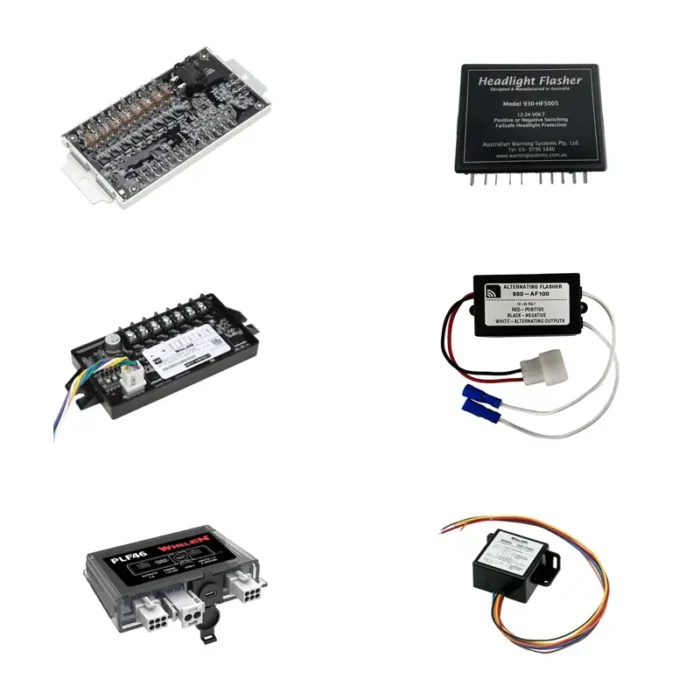
Vehicle warning light flasher systems used to control compatible headlights, taillights, grille lights and other warning-light circuits.
What Is a Vehicle Warning Light Flasher?
A vehicle warning light flasher is an electronic module or control device used to create a defined flashing pattern through compatible vehicle lighting. Depending on the product and installation, this may involve the headlights, high beams, taillights, grille-mounted lights or other supported warning-light circuits.
The important point is that the flasher and the light are not necessarily the same product. A dedicated LED warning light usually contains its own light source and electronics. A flasher module, on the other hand, can control how compatible lighting operates.
This is why emergency light flasher systems in Australia need to be selected according to the complete vehicle setup. The module needs to suit the lighting it will control, the vehicle’s electrical architecture and the intended warning function.
Flashers are also available in different forms. Some provide a straightforward alternating pattern, while more advanced products can support multiple circuits or programmable functions. The right choice depends on what the vehicle actually needs rather than simply choosing the module with the longest feature list.
How Do Vehicle Flasher Systems Work?
At a basic level, a flasher controls the electrical operation of compatible lighting so that it follows a particular warning pattern. Instead of the relevant lights remaining continuously illuminated, the module controls when each supported circuit turns on and off.
An alternating headlight system is a good example. Rather than both supported lights flashing at the same time, the flasher can alternate between the left and right sides. This creates the recognisable alternating or “wig-wag” effect used in some professional vehicle warning applications.
More advanced systems can involve several lighting circuits. A vehicle lighting interface module may provide a way of incorporating supported factory lighting into a wider warning configuration, while a programmable vehicle flasher may provide greater flexibility over supported outputs and functions.
The exact operation varies significantly between products. That is why the manufacturer’s specifications should always be checked before assuming that a particular module can control a certain headlight, taillight or warning-light configuration.
Understanding the Different Types of Vehicle Flashers
There isn’t one universal flasher that suits every emergency, fleet or specialist vehicle. The AWS Flashers range includes different products and interfaces because vehicles and warning requirements vary.
Understanding the main types makes product selection much easier.
Headlight Flashers
Headlight flashers allow compatible vehicle headlights or high-beam circuits to provide a controlled warning pattern. They can add a highly visible forward-facing warning function without relying entirely on a separate roof-mounted light.
When looking at headlight flashers in Australia, compatibility should be one of the first considerations. Modern vehicles use different headlight technologies and electrical control systems, so a module that works on one model cannot automatically be assumed to work on another.
Australian Warning Systems, for example, lists a dedicated headlight flasher in its range as well as vehicle-specific harnesses for selected applications. This illustrates why the flasher itself is only one part of the selection process.
Headlight, Grille and Taillight Flasher Interfaces
Not every warning setup is limited to the headlights. Some products are designed to interface with supported headlight, grille or taillight circuits, allowing different areas of the vehicle to contribute to its warning presence.
This is where products such as a headlight and taillight flasher or grille light flasher module become relevant. Australian Warning Systems lists Whelen interface modules for headlight, grille and taillight applications within its current range.
For fleet managers and vehicle fitters, these products make it important to think beyond the question of “which flasher do we need?” The more useful question is which vehicle lights need to participate in the warning system and what compatible interface is required to control them.
LED Vehicle Flasher Modules
LED technology is now common across both factory vehicle lighting and dedicated warning equipment, but that does not mean every flasher will work with every LED lighting system.
When selecting LED vehicle flasher modules in Australia, check the specific lighting architecture and product requirements. Modern vehicle electronics can be considerably more complex than a traditional circuit where a basic module simply switches power on and off.
If the vehicle has LED headlights, for example, confirm that the intended flasher has been designed or specified for that application rather than assuming compatibility because both products use LED technology.
Programmable Flasher Systems
A programmable flasher can provide more control than a simple fixed-pattern unit. Depending on the product, this may include configurable outputs, flash functions or integration options.
These systems can be useful in more complex emergency vehicle flasher systems in Australia, particularly where the vehicle has several warning functions that need to work as part of a coordinated installation.
Programmability should still serve an operational purpose. A more complex module is not automatically the right choice if the vehicle only requires a straightforward supported flashing function.
Flasher Module vs LED Warning Light: What Is the Difference?
It is easy to group flashers and warning lights together because both contribute to vehicle visibility, but they perform different roles.
A dedicated LED warning light is a physical light designed to generate its own visual warning output. Depending on the product, it may be installed on a grille, roof, body panel, rear of the vehicle or another suitable location.
A flasher module is primarily a control component. It can change how compatible existing vehicle lights or connected lighting circuits operate. Instead of adding another physical lamp, a vehicle headlight flasher module, for example, may use supported headlights as part of the vehicle’s warning arrangement.
This distinction is useful when planning emergency vehicle warning lighting. A vehicle may use dedicated warning LEDs for visibility from particular angles while also using a compatible headlight flasher for additional forward warning. Lightbars, beacons, directional warning lights and flashers can therefore have different jobs within the same overall system.
The decision is not necessarily between a flasher and an LED warning light. In an appropriate vehicle application, the question may be how different warning components should work together.
How to Choose the Right Flasher for Your Vehicle
Choosing a flasher should start with the vehicle, not with the product catalogue. Two modules can look very similar but suit completely different electrical or lighting configurations.
Start by identifying exactly what you want the flasher to control. If the requirement is limited to compatible headlights, the solution may be relatively straightforward. If the vehicle also needs taillight, grille-light or wider warning-system integration, a different interface or control arrangement may be required.
Vehicle details are equally important. Make, model, year, headlight technology and electrical voltage can all affect selection. The way the vehicle switches its lighting circuits can also matter, particularly when dealing with modern electronically controlled systems.
Before choosing a flasher, it is worth confirming:
- Which lights need to flash: headlights, high beams, taillights, grille lights or another supported circuit.
- Vehicle make, model and year: vehicle-specific electrical differences can affect compatibility.
- Lighting technology: halogen and LED systems may have different requirements.
- Electrical voltage: check whether the vehicle and module operate on 12V, 24V or a supported voltage range.
- Switching and interface requirements: do not assume all vehicle lighting circuits are controlled in the same way.
- Harness availability: a suitable vehicle-specific harness may be available for some applications.
- Existing warning equipment: consider how the flasher will operate alongside lightbars, beacons, directional LEDs or other equipment.
- Manufacturer specifications: the module manufacturer’s compatibility and installation requirements should take priority over generic assumptions.
Working through these details makes it easier to narrow down suitable vehicle warning light flashers in Australia and reduces the risk of selecting a product that cannot be integrated correctly with the vehicle.
12V and 24V Vehicle Flasher Systems
Voltage is an obvious specification, but it is only one part of compatibility.
Many passenger-based vehicles and light commercial vehicles use 12V electrical systems, while some trucks, heavy vehicles and specialist platforms may use 24V systems. Some flasher products support a range of voltages, but this should always be checked at product level.
For example, the AWS headlight flasher is specified for 12–24V operation and supports positive and negative switched headlights. That makes those specifications relevant when assessing a particular application, but they should not be treated as specifications for every product in the Flashers category.
When looking for a 12V 24V vehicle flasher, therefore, don’t stop once the voltage matches. The lighting technology, circuit arrangement, switching method and other compatibility requirements still need to be checked.
Why Vehicle-Specific Flasher Harnesses Matter
The Flashers category also contains wiring harnesses for selected vehicle and headlight applications. These are easy to overlook when concentrating on the flasher module itself, but they can be an important part of the installation.
A vehicle-specific harness is intended to suit a particular wiring or vehicle application. The AWS category currently shows harnesses for Ford Territory, H4 headlights and selected Commodore applications alongside its flasher products.
For an installer, the correct harness can help create a more appropriate connection between compatible equipment and the vehicle’s wiring. It can also make future servicing easier because the installation has been planned around the intended components rather than improvised during the fitout.
The presence of a harness does not remove the need to confirm compatibility. The flasher, harness, vehicle and lighting configuration still need to be assessed as a complete system.
Can Headlight Flashers Work With LED Headlights?
They can in supported applications, but “LED compatible” should never be assumed simply because the vehicle has LED headlights.
Modern LED headlights can use electronic drivers, control modules and vehicle communication systems that differ significantly between makes and models. The way a vehicle controls an LED headlight can therefore be just as important as the lamp itself.
When considering a headlight flasher module in Australia, check the exact product specification against the vehicle’s lighting system. If the manufacturer lists particular vehicle, headlight or interface requirements, those requirements should guide the selection.
The same principle applies when replacing an older vehicle with a newer fleet model. A flasher configuration that worked on the previous vehicle may not automatically transfer to the new one, even if the warning requirement remains unchanged.
Why Headlight, Taillight and Grille Flashers Can Serve Different Purposes
Where a warning signal is seen can be just as important as how it flashes.
Headlight flashers primarily contribute to forward-facing warning. Rear lighting interfaces can support warning visibility from behind, while grille-mounted warning equipment can provide another forward-facing position at a different height on the vehicle.
This is why some emergency warning light flashers in Australia form part of a wider lighting setup rather than operating as a single isolated function.
The appropriate arrangement depends on the vehicle’s operational role, body design and existing warning equipment. A passenger-based response vehicle may have very different mounting and interface opportunities from an ambulance, truck or specialist service vehicle.
Rather than trying to make one lighting position perform every job, a well-planned system considers how the vehicle needs to be recognised from the relevant directions and then selects compatible warning equipment accordingly.
Which Vehicles Use Warning Light Flasher Systems?
Flasher systems can be found across a range of professional and specialist vehicle applications, but the required equipment varies considerably.
Emergency response vehicles may use flashers as part of a broader audible and visual warning package. Ambulances can have vehicle-specific lighting arrangements, while fire and rescue appliances may combine factory lighting interfaces with dedicated warning lights fitted around a much larger body.
Council, utility and specialist fleet vehicles can have different visibility requirements again. Some operate around worksites, roadside environments or moving traffic where fleet vehicle warning lights form part of a wider risk-management approach.
The important point is not to assume that the same vehicle strobe flasher systems in Australia are suitable across every vehicle category. The vehicle’s authorised use, applicable road and workplace requirements, electrical system and operational environment all need to be considered.
For emergency-style lighting in particular, the legality of fitting and operating particular warning equipment can depend on the vehicle and jurisdiction. Equipment should therefore be selected and used according to the requirements that apply to the specific vehicle and operation.
How Flashers Fit Into a Complete Vehicle Warning System
A flasher can improve the way compatible vehicle lighting contributes to a warning system, but it should not automatically be treated as the entire warning solution.
A professional vehicle may use several layers of visual warning. A roof-mounted lightbar or beacon can provide high-level visibility, directional LEDs can cover particular viewing angles, and a headlight flasher may provide additional forward warning. Depending on the vehicle’s authorised role, audible warning equipment and integrated controllers may also form part of the fitout.
This broader view is particularly useful when planning emergency vehicle flasher systems in Australia. Instead of selecting each component independently, consider how the flasher will operate alongside the rest of the vehicle’s warning equipment.
Australian Warning Systems supplies a wider range of visual and audible vehicle warning equipment in addition to flashers, including lightbars, beacons, directional lighting, alarms and siren equipment. Its installation service also covers emergency, fleet, trade and specialist vehicles.
For fleet projects, this system-based approach can also make future servicing and replacement planning more manageable.
Common Mistakes When Choosing a Vehicle Flasher
Most flasher selection problems come from making assumptions too early. A module may have the right voltage or the right number of outputs and still be unsuitable for the vehicle.
One common mistake is choosing a module before confirming what type of lighting the vehicle uses. This becomes particularly important with modern LED systems, where the electronic architecture can differ substantially between vehicles.
Another is assuming that a vehicle strobe flasher system in Australia is the same thing as a dedicated strobe or LED warning lamp. Understanding whether the product is a light, flasher, interface or controller avoids confusion when planning the fitout.
Other issues include overlooking vehicle-specific harness requirements, assuming that every flasher can control headlights and taillights, or replacing a module without checking whether the new product matches the existing wiring and lighting configuration.
For a new fitout, it is also worth considering the complete warning package before installation begins. Adding a flasher first and then trying to integrate lightbars, grille lights and other controls later can make the electrical design more complicated than necessary.
Planning Flasher Systems Across a Fleet
A single-vehicle installation starts with one vehicle. A fleet project needs to consider whether that same configuration can be repeated reliably across multiple vehicles.
The first step is to group genuinely similar vehicles. If several fleet vehicles share the same make, model, year, lighting technology and operational role, there may be an opportunity to standardise compatible equipment and installation methods.
Different vehicle groups should still be assessed separately. A passenger-based response vehicle, utility vehicle and heavy truck may all need emergency warning light flashers in Australia, but their electrical systems and warning requirements can be very different.
A practical fleet process is to document the vehicle group, existing lighting, required warning function, compatible flasher or interface, harness requirements and any integration with other warning equipment. Once the configuration has been verified, the same documented setup can be considered for other genuinely compatible vehicles.
This approach can make equipment replacement, servicing and future fitouts easier without assuming that one flasher module is universal across the fleet.
Vehicle Flasher Selection Checklist
Before ordering a flasher or sending a vehicle for installation, collect enough information to properly assess the application. This is particularly useful for fleet managers who may be requesting equipment for several vehicle types at once.
Check the vehicle make, model and year; whether the electrical system is 12V or 24V; the type of headlights and other lights being controlled; the required warning pattern; and whether a vehicle-specific harness or interface is available.
You should also confirm what other warning equipment is already fitted. If the vehicle uses a lightbar, grille lights, directional LEDs or another controller, the new flasher needs to be considered within that existing system.
Finally, check the manufacturer’s specifications for the particular flasher and vehicle application. Where permanent electrical work or integration with factory vehicle systems is involved, professional installation can help ensure the equipment is fitted according to the relevant product and vehicle requirements.
Australian Warning Systems provides a range of vehicle warning light flashers in Australia, including headlight flashers, harnesses, interface modules and programmable products for professional vehicle applications.
Explore Australian Warning Systems Flashers
Final Thoughts
A vehicle flasher may be a relatively small electronic component, but selecting one properly requires more than checking a voltage rating and choosing a flash pattern.
Start with the vehicle. Identify which lights need to be controlled, how those lights operate, whether a specific harness or interface is required and how the flasher needs to work with the rest of the warning equipment. From there, the product specifications can be matched to the actual application.
This is especially important when comparing headlight flashers in Australia or planning more complex emergency vehicle flasher systems in Australia. Vehicle lighting technology continues to vary across makes, models and fleet types, so compatibility should always come before convenience.
For a single vehicle, that approach helps avoid purchasing the wrong module. Across a fleet, it creates a much clearer foundation for standardised, serviceable and appropriately configured warning-light installations.
Frequently Asked Questions
What does a vehicle warning light flasher do?
A vehicle warning light flasher controls compatible lighting circuits to produce a defined flashing pattern. Depending on the product, it may operate supported headlights, taillights, grille lights or other warning-light circuits. The exact functions depend on the flasher and vehicle configuration.
How does an emergency vehicle headlight flasher work?
An emergency vehicle headlight flasher interfaces with compatible headlight circuits and controls them according to the flasher’s designed warning pattern. Some systems alternate the left and right lights, while other configurations may provide different functions. Compatibility with the vehicle’s lighting system needs to be confirmed before installation.
How do I choose a flasher module for a work or emergency vehicle?
Start with the vehicle make, model, year, electrical voltage and lighting technology. Then determine which lights need to flash and what warning function is required. Check these details against the flasher manufacturer’s compatibility information and identify whether a specific harness or lighting interface is also needed.
What is a wig-wag headlight flasher?
A wig-wag flasher produces an alternating pattern between compatible left and right lights. Instead of both lights flashing together, one side operates and then the other, creating a distinctive alternating warning pattern.
What is the difference between a flasher module and an LED warning light?
An LED warning light is the physical light that generates a visual warning. A flasher module is primarily a control device that manages how compatible lighting circuits operate. Depending on the vehicle, both can be used within the same warning-light system.
Can a headlight flasher work with LED headlights?
It can when the particular flasher is compatible with the vehicle’s LED lighting system. Compatibility should not be assumed because LED headlights can use different electronic controls and interfaces. Check the flasher manufacturer’s specifications for the particular application.
Can a vehicle flasher control headlights and taillights?
Some products can interface with multiple lighting circuits, including supported headlight and taillight applications, while others are intended for a more specific function. Check the individual module’s outputs and manufacturer specifications before deciding which lights it can control.
What voltage flasher module do I need for a 12V or 24V vehicle?
The flasher needs to support the vehicle’s electrical voltage. Some products support 12V, some 24V and others a wider operating range. Voltage is only one compatibility factor, so the lighting type, switching method and intended circuits should also be checked.
Can a warning light flasher be integrated with existing vehicle lighting?
Yes, certain flasher and interface products are specifically intended to work with compatible existing vehicle lighting. The appropriate solution depends on the vehicle, lighting architecture, flasher specifications and any other warning equipment already installed.
What should I check before installing a vehicle flasher module?
Confirm the vehicle make, model and year, electrical voltage, headlight and lighting technology, required flash function, supported circuits, wiring or harness requirements and compatibility with existing warning equipment. Manufacturer installation instructions should be followed, particularly where the flasher interfaces with factory vehicle electronics.