


A warning lightbar that performs well on a metropolitan service ute may be the wrong choice for a vehicle spending every shift on dusty haul roads, rough construction access tracks or around heavy mobile plants.
Mining and construction fleets expose warning equipment to a different combination of vibration, dust, water, vehicle movement and visibility problems. They can also operate under site-specific vehicle standards that go beyond ordinary road requirements.
That changes the buying question.
When fleet teams compare LED light bars Australia, they should not begin with brightness, length or price. They should begin with the environment, the vehicle, the site’s rules and the evidence that supports the product specification.
For mining vehicle warning lights, the most expensive mistake is not buying too little light. It is ordering dozens of units before confirming that the selected equipment actually suits the site and vehicle.
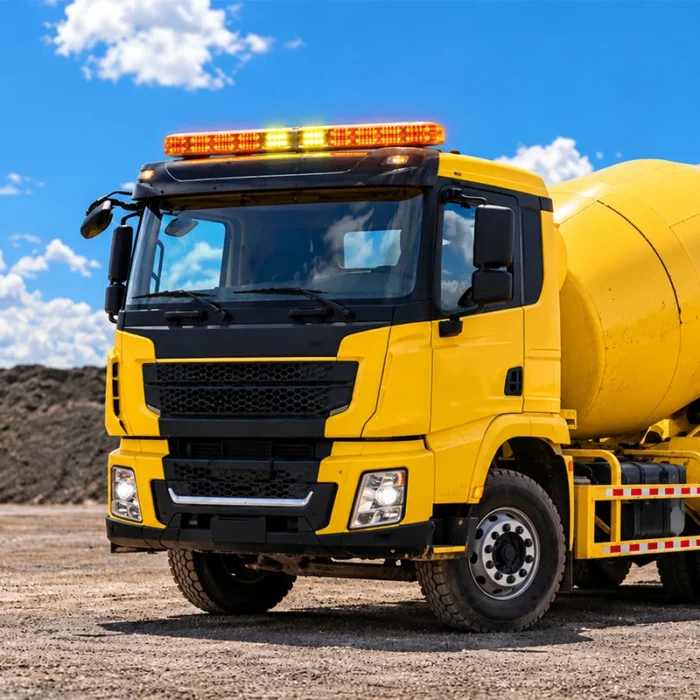
Mining and construction vehicles need warning lightbars suited to site conditions, visibility requirements and vehicle specifications.
“Mine Spec” Is Not One Universal Australian Specification
Buyers regularly use the phrase mine spec vehicle, but Australia does not have one universal lightbar specification that applies identically to every mine, quarry and construction site.
A mine operator may set its own vehicle-access requirements as part of its risk controls. One site may specify a particular warning-light colour, mounting position or visibility requirement. Another may combine flashing lights with radio protocols, vehicle identification, proximity controls or other systems.
NSW Resources treats vehicle interaction as a significant mining hazard and now uses a dedicated technical reference guide for surface mining vehicle operating areas. Its approach centres on layered controls rather than relying on one warning device.
That distinction matters.
A lightbar can support vehicle conspicuity, but it does not replace:
- traffic separation;
- site right-of-way rules;
- radio communication;
- proximity controls;
- reversing alarms;
- exclusion zones;
- site-specific operating procedures.
SafeWork NSW similarly recommends combinations of controls around mobile plant, including audible and visible alarms such as flashing lights.
So before searching for warning light bars Australia, ask the site for its current vehicle specification.
Mining and Construction Vehicles Face Different Conditions
Mining and construction often appear together in product descriptions, but fleet managers should not automatically give them the same warning-light specification.
A mine-site light vehicle may travel long distances over corrugated or unsealed roads while operating around haul trucks with significant blind spots. A construction ute may spend more time entering and leaving a changing worksite where workers, plant and delivery vehicles share limited space.
A civil-maintenance truck may carry toolboxes and racks that affect lightbar visibility. A loader or plant support vehicle may expose mounted equipment to constant dust and vibration.
The environment changes the specification.
Before choosing a lightbar, document:
- whether the vehicle works mainly on sealed, gravel or haul roads;
- expected dust and water exposure;
- wash-down practices;
- vibration and impact exposure;
- roof racks, ROPS structures or other obstructions;
- vehicle height restrictions;
- 12V, 24V or other electrical requirements;
- hours of operation and night work;
- site warning-light rules;
- maintenance and replacement expectations.
That list gives a supplier far more useful information than asking for “the best mine-spec lightbar”.
Check the Ingress Rating — Do Not Assume “Heavy Duty” Means Waterproof
Dust and water protection deserves special attention for mining and construction fleets.
IP ratings describe tested levels of protection against solid particles and water. A buyer should therefore look for a published IP rating when the operating environment makes ingress protection important.
Do not assume that terms such as rugged, commercial grade or heavy duty equal a specific IP rating.
This matters when comparing products in the AWS range.
The AWS page for the IONNIC Blade Series lists IP67, while the SL Series also lists IP67. Those published ratings give procurement teams a documented starting point when ingress protection forms part of the site requirement.
By contrast, the current AWS ECCO 1200+ product page lists its aluminium chassis, polycarbonate lens, 12–24V operation, approvals and other specifications, but it does not currently state an IP rating on the web page.
That does not mean the product lacks suitable ingress performance. It means a buyer should request the relevant manufacturer specification before using an IP requirement in a procurement decision.
For amber warning light bars Australia used in high-dust or wash-down environments, documentation matters more than assumptions.
Ask the Same Question About Vibration
Mine roads and construction access tracks can repeatedly load mounting brackets, wiring connections and the lightbar housing.
A strong housing is useful, but a fleet manager should not convert a material description into an unsupported vibration-performance claim.
Instead, ask:
- Does the manufacturer provide vibration or shock test information?
- What mounting system does it approve?
- Does the installation suit the vehicle’s roof or support structure?
- How often should the mounting hardware be inspected?
- Can replacement brackets, controllers or components be sourced?
- Will the warranty apply to the intended application?
The ECCO 1200+ uses a heavy-duty aluminium chassis and polycarbonate lens, while AWS offers vehicle-related mounting options for the series.
Those are relevant product features, but the fleet still needs to confirm that the selected configuration suits its working environment.
This documentation-first approach creates a stronger procurement process for vehicle warning light bars Australia than relying on marketing descriptions.
Visibility Depends on the Whole Vehicle
A mine-site ute may carry an amber lightbar on the roof and still become difficult to identify from a particular direction.
Why?
Because visibility changes once the vehicle receives:
- ladder racks;
- roof storage;
- elevated trays;
- service bodies;
- aerials;
- mine flags;
- mounted tools;
- other safety equipment.
Heavy vehicles can create an even bigger contrast in scale. A light vehicle operating close to large mobile plant must remain easy to recognise within the site’s broader vehicle-interaction controls.
NSW Resources recorded 46 vehicle-interaction incident notifications during a six-month period reported in its October 2024 safety bulletin, highlighting the importance of communication and situational awareness around mine vehicles.
A more recent NSW near miss involved a front-end loader failing to identify a light vehicle waiting near an intersection.
A warning light alone cannot solve these hazards, but the examples reinforce why fleet teams should assess conspicuity on the completed vehicle.
Walk around the vehicle at normal operating height and inspect the warning signal from the front, rear, sides and quarter angles. Do this with its regular roof and body equipment fitted.
If equipment creates a genuine visibility gap, assess whether supplementary warning lighting forms part of the approved site solution.
Construction Sites Need More Than Standard Hazard Lights
Construction fleets deserve a separate check because workplace traffic conditions can change rapidly.
WorkSafe Victoria’s civil construction industry standard states that vehicles operating within a works area should have at least one revolving amber light and calls for additional lights where one unit is not visible from all angles. It also states that normal vehicle hazard lights are inadequate for that purpose.
That guidance gives Victorian civil-construction buyers a useful lesson: visibility around the vehicle matters more than simply having an amber lamp fitted.
SafeWork NSW also identifies flashing lights as one of several controls for managing mobile-plant risks, alongside separation, traffic routes, barriers, spotters and communication systems.
SafeWork SA similarly advises worksites to keep moving-plant alarms operational and appropriate for site conditions while managing traffic through a combination of controls.
Therefore, amber warning light bars Australia buyers should specify the lighting within the site’s wider traffic-management system, not as a standalone safety solution.
Check Vehicle Height Before Choosing the Lightbar
A low-profile design can be valuable where vehicles already carry roof-mounted equipment or operate under height constraints.
But buyers should check installed height rather than housing height alone.
Brackets and mounting feet add height. Roof curvature can change the final installation. Some vehicles may also need clearance from racks or other equipment.
The ECCO 1200+ has a listed housing height of 64mm excluding mounting feet and comes in standard lengths including 1220mm, 1370mm, 1525mm and 1830mm. It operates on 12–24V systems and provides 48 selectable flash patterns on the listed standard configuration. Australian Warning Systems
Those details make it relevant to industrial fleet evaluation, but they do not determine suitability by themselves.
Measure first. Specify second.
12–24V Compatibility Is Only the Beginning
Industrial fleets may include utes, light trucks, heavy vehicles and specialist equipment. That can create several electrical configurations across one fleet.
A 12–24V lightbar gives useful flexibility, but the installer must still check:
- actual supply voltage;
- current draw;
- circuit protection;
- cable size and routing;
- switching;
- controller compatibility;
- accessory loads;
- existing vehicle electronics.
If the lightbar includes work lights, alley lights, a Safety Director or additional functions, those features must also form part of the electrical design.
The objective should be a serviceable installation rather than simply getting the bar to illuminate on installation day.
For large fleets, keep wiring diagrams, controller details and installed-part records against each vehicle group.
Do Not Order the Whole Fleet from the First Vehicle
Mining and construction procurement often becomes expensive because a product gets approved from a catalogue and then ordered across multiple vehicle classes.
A better approach starts with a representative fitout.
Choose one vehicle from the intended group, install the proposed warning system and then inspect it under realistic conditions.
Check:
- mounting and clearance;
- front, side and rear visibility;
- operation with normal site equipment fitted;
- controller accessibility;
- wiring and circuit protection;
- interaction with other warning devices;
- service access;
- site approval requirements.
Only after that review should the fleet standardise the configuration.
A site ute, maintenance truck and heavy support vehicle may eventually use different physical equipment while following the same approved warning-light policy.
What Should You Ask for in a Mining or Construction Fleet Quote?
Do not request “20 amber lightbars” and leave the supplier to guess the application.
Prepare a fleet brief containing the vehicle make and model, electrical system, roof arrangement, site environment, mounting limitations, ingress requirements, warning-light colour, site-specific specifications and required supporting documentation.
Also request the exact product model, mounting hardware, controller, warranty and installation scope in the quotation.
If a particular IP rating, approval or performance standard is mandatory, ask for the evidence before purchase.
AWS carries several industrial warning-light options. Buyers can compare the available roof-lightbar range or send vehicle and site requirements to Australian Warning Systems for a fitout discussion.
When reviewing LED light bars Australia, the strongest specification is not the one with the longest feature list. It is the one you can trace back to the vehicle, operating environment and actual site requirement.
Frequently Asked Questions
What warning lights do mine-site vehicles need in Australia?
There is no single warning-light specification for every Australian mine. Mine operators can impose site-specific vehicle requirements as part of their safety systems. Confirm the site’s current vehicle standard before selecting mining vehicle warning lights.
Do mining vehicles need amber flashing lights?
Many mine and industrial sites use amber warning lighting, but do not assume one national requirement applies everywhere. Check the applicable mine rules, state requirements and vehicle role before specifying colour, position or operating conditions.
What IP rating should a mining lightbar have?
The required ingress protection depends on the environment and site specification. If the vehicle faces heavy dust, rain or wash-down, establish the required protection level and choose a product with a documented rating. Do not infer an IP rating from terms such as “heavy duty”.
Is a roof lightbar enough for a construction vehicle?
Not necessarily. Racks, service bodies and other equipment can obstruct a roof-mounted warning signal. Inspect visibility around the completed vehicle and add supplementary warning lighting only when the site’s risk assessment or specification identifies a need.
Can one warning-lightbar model be used across an entire mining fleet?
Sometimes, fleets should validate the configuration across different vehicle groups first. Utes, trucks and specialist support vehicles can differ in roof height, electrical systems, mounting space and site role.
What should I check before buying a mine-spec LED lightbar?
Confirm the site rules, warning-light colour, ingress requirements, vibration or shock documentation where required, operating voltage, mounting method, installed height, visibility, controller needs, serviceability, warranty and spare-part availability.