


LED Message Boards for Councils, Utilities and Public Works Vehicles: A Practical Guide
A Typical Day for a Council Vehicle in Australia
At 7:00 AM, a council maintenance vehicle leaves the depot.
The crew’s job seems simple.
Inspect a damaged footpath.
Check a drainage issue.
Replace a road sign.
Assist with vegetation management.
Yet before the day ends, that vehicle may stop beside busy roads dozens of times.
Every stop creates a potential safety risk.
Motorists may not know workers are ahead.
Drivers may not understand why traffic has slowed.
Vehicles may approach work zones too quickly.
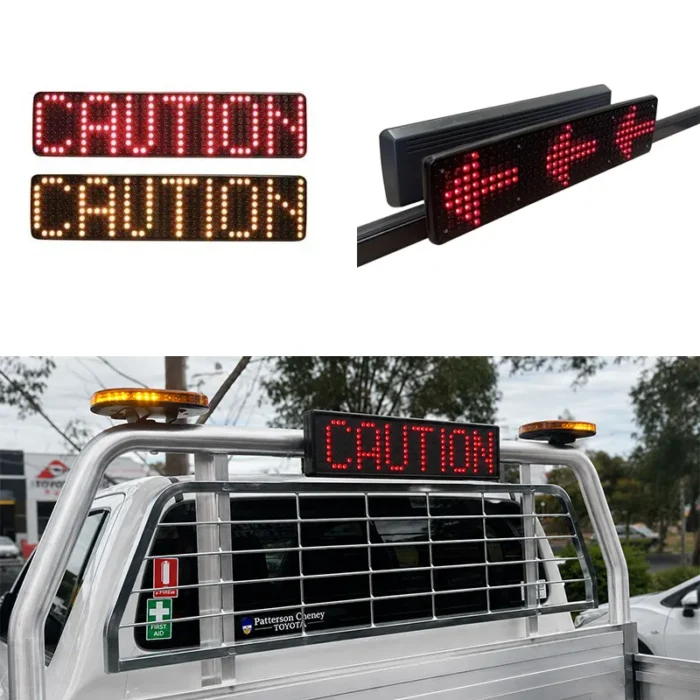
This is why modern councils across Australia are increasingly investing in council vehicle message boards and municipal LED message displays to improve communication and reduce risk.
Why Visibility Is One of the Biggest Challenges for Councils
Most public works activities happen in live traffic environments.
Unlike construction sites that can be fully isolated, council and utility crews often work beside moving traffic.
Examples include:
- Road inspections
- Tree maintenance
- Drainage repairs
- Sign replacement
- Utility maintenance
- Street lighting works
- Emergency response
In each case, workers rely on approaching drivers seeing them early enough to react safely.
Traditional warning methods help, but they don’t always communicate enough information.
A flashing beacon tells drivers something is happening.
A vehicle message display Australia solution tells drivers exactly what is happening.
Morning Shift: Road Maintenance Operations
Imagine a road maintenance crew repairing potholes on a suburban road.
The vehicle arrives.
Traffic continues flowing.
Drivers approach from both directions.
Without clear communication, motorists may only notice workers at the last moment.
This is where a road maintenance vehicle message board becomes valuable.
Messages such as:
- ROADWORKS AHEAD
- SLOW DOWN
- PREPARE TO STOP
can be displayed instantly.
The result is better awareness and more predictable driver behaviour.
Mid-Morning: Tree Maintenance and Arborist Teams
Tree maintenance is one of the most common council activities requiring roadside work.
Crews often operate:
- Elevated work platforms
- Chippers
- Traffic control equipment
while working close to active traffic lanes.
A fleet safety message board helps notify motorists that work is taking place ahead.
Instead of relying solely on cones and signs, crews can provide dynamic warnings visible from a greater distance.
This improves worker protection while reducing driver confusion.
Afternoon: Utility Repairs and Infrastructure Maintenance
Now consider a utility contractor repairing underground infrastructure.
The worksite may move several times throughout the day.
Static signs require:
- Transport
- Setup
- Removal
- Repositioning
A utility vehicle message display moves with the crew.
Messages can be changed instantly depending on the task.
Examples include:
- UTILITY WORKS
- TRAFFIC CONTROL AHEAD
- WORKERS ON ROAD
- PREPARE TO STOP
For mobile operations, this flexibility becomes a major operational advantage.
Why Councils Use LED Message Boards
One of the most common questions asked through Google AI, ChatGPT and Gemini is:
Why Councils Use LED Message Boards
The answer is simple.
Councils need communication tools that are:
- Visible
- Flexible
- Easy to update
- Suitable for multiple tasks
- Effective across different road environments
A municipal LED message display allows one vehicle to support multiple activities without requiring separate signage for every situation.
This reduces setup time while improving communication.
Municipal Fleet Warning Systems Are Becoming Standard
Many Australian councils now operate large fleets that include:
- Maintenance vehicles
- Arborist trucks
- Utility vehicles
- Inspection vehicles
- Traffic management units
Because these fleets perform similar tasks across multiple locations, consistency matters.
Using municipal fleet warning systems helps create a standardised approach to safety.
Drivers quickly recognise warning messages.
Workers become familiar with the equipment.
Fleet managers gain greater control over safety procedures.
This is one reason LED message displays are becoming increasingly common in local government fleets.
Public Works Vehicle Safety Signage Is Evolving
A decade ago, most roadside communication relied heavily on:
- Static signs
- Cones
- Flashing lights
Today, councils are looking for smarter solutions.
Public works vehicle safety signage has evolved to include programmable displays capable of delivering clear instructions in real time.
Instead of simply warning drivers that something is happening, modern systems explain what action drivers should take.
This creates safer interactions between motorists and work crews.
The Difference Between Seeing a Hazard and Understanding a Hazard
This distinction is important.
A flashing light tells drivers:
“Pay attention.”
A programmable road safety signage system tells drivers:
“Slow down.”
“Prepare to stop.”
“Roadworks ahead.”
Understanding creates better decision-making.
Better decision-making creates safer roads.
This is one of the key reasons councils continue investing in electronic safety message displays.
How Vehicle Message Displays Support Public Safety
Public safety extends beyond workers.
It also includes:
- Drivers
- Cyclists
- Pedestrians
- Local residents
A properly deployed vehicle message display Australia solution helps everyone understand changing road conditions more quickly.
Benefits include:
- Reduced confusion
- Improved traffic flow
- Better compliance
- Safer work zones
- Lower accident risk
These outcomes align directly with the objectives of councils and utility providers.
Choosing the Right LED Message Display for a Council Fleet
The most effective approach is simple:
Start with how the vehicle is used, then choose a setup that matches those conditions.
Questions fleet managers should ask:
What type of work does the vehicle perform?
- Road maintenance
- Utility works
- Tree maintenance
- Traffic management
Where does the vehicle operate?
- Urban streets
- Regional roads
- High-speed highways
What level of visibility is required?
- Daytime only
- Day and night operation
- High-traffic environments
Does the message need to change regularly?
Some operations benefit from a simple warning display.
Others require a fully programmable system.
Selecting the correct solution improves both safety and operational efficiency.
Looking Ahead: The Future of Municipal Fleet Safety
Australian councils are under increasing pressure to improve safety outcomes while maintaining efficient public services.
As fleets become smarter and more connected, council vehicle message boards and municipal LED message displays will continue playing a larger role in:
- Traffic management
- Public communication
- Worker protection
- Fleet standardisation
They are no longer viewed as optional accessories.
They are becoming essential fleet safety equipment.
Final Thoughts
Every day, council and utility crews work beside live traffic to keep Australian communities operating safely.
The challenge is making sure motorists understand what is happening before they reach the work zone.
That is exactly where council vehicle message boards, utility vehicle message displays, fleet safety message boards, and municipal LED message displays provide value.
By delivering clear, visible, and adaptable communication, these systems help create safer roads, safer worksites, and better outcomes for workers and road users alike.
👉 Related Reading:
Vehicle Message Displays & Traffic Safety Signage in Australia: Complete Buyer’s Guide
👉 Explore Vehicle Message Display Solutions:
CODE 3 M5 Message Display
Mirror Kit Message Display