


Fleet Digital Alerting: Why Australian Fleets Are Moving Beyond Traditional Warning Lights
Introduction
Fleet safety has always been about protecting people, vehicles and the communities they serve. For decades, Australian and New Zealand fleets have relied on warning lights, traffic management equipment and established operating procedures to reduce risks during roadside operations.
Those systems remain essential today.
However, fleet operations have changed significantly. Roads are busier, roadside maintenance activities are more frequent and organisations are expected to manage safety while maintaining operational efficiency and minimising downtime.
As a result, many organisations are no longer asking “Do we have warning lights?”
Instead, they’re asking:
“Are we doing everything possible to improve driver awareness before motorists reach our vehicles?”
This shift is driving interest in fleet digital alerting, an emerging technology that complements existing warning systems by helping connected drivers receive earlier awareness of active roadside operations.
Across Australia and New Zealand, emergency services, councils, road authorities and commercial fleet operators are beginning to include digital alerting as part of their long-term fleet safety strategies—not because it replaces existing equipment, but because it strengthens the overall approach to roadside safety.
In this guide, we’ll explore why fleet safety is evolving, the challenges modern fleets face and how digital alerting is becoming an important part of future-ready fleet management.
Looking for a technical explanation of digital alerting? Read our guide What Are Emergency Vehicle Digital Alerts and How Do They Improve Road Safety? before continuing.
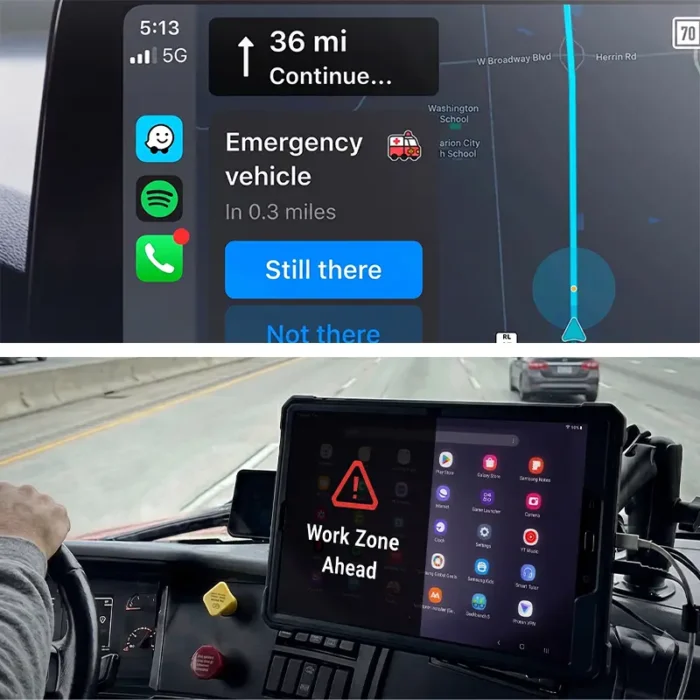
Fleet Safety Is No Longer Just About Compliance
Traditionally, fleet safety focused on meeting operational requirements and ensuring vehicles carried the appropriate warning equipment for their intended use.
Today, fleet managers are responsible for much more than vehicle compliance.
They must also consider:
- Driver safety
- Public safety
- Fleet productivity
- Operational efficiency
- Technology integration
- Risk management
- Future fleet planning
- Asset lifecycle management
As roadside environments become increasingly complex, organisations are recognising that safety is no longer achieved through a single piece of equipment.
Instead, it requires multiple layers working together.
Modern fleet safety combines:
- Vehicle warning lights
- Traffic management equipment
- Fleet telematics
- Driver training
- Operational procedures
- Maintenance planning
- Connected technologies
- Digital communication
This layered approach helps organisations improve awareness while supporting safer roadside operations.
The Limitations of Visual-Only Roadside Warning
Traditional roadside warning systems continue to play an essential role in protecting workers and alerting motorists. However, fleet managers should also consider the broader operational factors involved when evaluating or expanding their roadside safety strategy.
Fleet Costs to Consider
When assessing roadside safety solutions, organisations should consider a range of operational and lifecycle costs, including:
- Hardware and installation
- Safety Cloud service costs
- Vehicle downtime during installation
- Training and change management
- Electrical or telematics integration
- Ongoing technical support
- Fleet expansion requirements
- Asset replacement cycles
While warning lights, traffic control equipment and fleet safety programs remain critical, relying solely on visual roadside warnings can present operational challenges as traffic volumes increase and roadside environments become more complex.
Some of the limitations fleet managers continue to consider include:
Limited Driver Awareness
Traditional warning lights only become effective once approaching motorists have a clear line of sight to the roadside operation. On high-speed roads, around bends, over crests or during reduced visibility conditions, the available reaction time may be limited, making it more difficult for drivers to respond safely.
Increasing Traffic Volumes
Australia’s transport networks continue to experience growing traffic volumes, placing greater pressure on roadside workers and fleet operators.
As traffic density increases, improving communication with approaching motorists becomes increasingly important.
Mobile Operations
Many fleet activities are constantly moving rather than remaining at a fixed location.
Examples include:
- Road inspections
- Vegetation management
- Utility maintenance
- Incident response
- Line marking
- Roadside assistance
These dynamic operations can make it more difficult for motorists to anticipate changing traffic conditions.
Growing Public Expectations
Communities increasingly expect organisations to adopt technologies that improve road safety while reducing disruption to everyday traffic.
This expectation is encouraging government agencies and commercial operators to explore connected safety solutions that complement existing fleet operations.
Why Fleet Managers Are Rethinking Roadside Safety
Modern fleet management is becoming increasingly data-driven.
Vehicle tracking, telematics, predictive maintenance and digital reporting are now standard across many organisations.
The next step is improving how vehicles communicate with the road environment.
Fleet managers are asking important questions such as:
- Can we improve awareness before drivers reach our roadside operations?
- How can technology support existing warning equipment?
- Can new systems integrate with our current fleet?
- How do we improve worker protection without changing existing procedures?
- How can we future-proof our fleet investment?
These questions are shifting fleet safety discussions away from individual products and towards long-term operational strategy.
Instead of adding more equipment, organisations are looking at how different technologies can work together to build a smarter, more connected fleet.
Beyond Warning Lights: A Smarter Fleet Safety Strategy
Warning lights remain one of the most important safety tools used by emergency services, councils and commercial fleet operators.
However, they are only one part of a comprehensive roadside safety strategy.
Forward-thinking organisations are combining traditional warning systems with technologies such as:
- Fleet telematics
- GPS fleet management
- Connected vehicle technology
- Digital alerting
- Fleet analytics
- Driver safety monitoring
- Intelligent transport systems
Together, these technologies help improve operational visibility while supporting safer roadside environments.
The objective isn’t to replace existing safety equipment.
It’s to ensure every safety system contributes to a broader fleet safety strategy that protects workers, motorists and the communities they serve.
What Leading Fleet Organisations Have in Common
Across Australia and New Zealand, organisations that continuously improve fleet safety often share similar characteristics.
They typically:
✔ Review fleet risks regularly
✔ Invest in staff training
✔ Maintain vehicle safety equipment
✔ Standardise fleet specifications
✔ Evaluate new technologies carefully
✔ Plan fleet upgrades strategically
✔ Work with experienced suppliers
✔ Focus on long-term operational improvements rather than short-term solutions
This proactive approach helps organisations adapt as technology and road safety expectations continue to evolve.
Fleet Safety Is Becoming a Long-Term Investment
Rather than viewing safety technology as an isolated purchase, many organisations now consider it part of a broader fleet investment strategy.
Modern fleet planning often includes:
- Vehicle replacement programs
- Fleet technology upgrades
- Connected systems
- Asset lifecycle planning
- Operational efficiency improvements
- Future transport technologies
Digital alerting is increasingly being evaluated within this broader framework because it complements existing fleet infrastructure while supporting future connected transport initiatives.
What Modern Fleet Safety Looks Like
The definition of fleet safety has changed significantly over the past decade.
Previously, safety programs focused primarily on vehicle compliance, warning equipment and driver training. While these remain essential, today’s fleet managers are expected to deliver much more.
Modern fleets must balance:
- Worker safety
- Public safety
- Operational efficiency
- Fleet availability
- Asset management
- Technology integration
- Long-term investment planning
Rather than treating safety as a standalone responsibility, many organisations now view it as an integrated part of fleet management.
This shift is encouraging councils, government agencies and commercial fleet operators across Australia and New Zealand to adopt technologies that improve visibility, communication and operational awareness while supporting existing roadside safety practices.
Fleet Digital Alerting Is Part of a Smarter Fleet Strategy
Introducing fleet digital alerting isn’t about replacing proven warning systems.
Instead, it adds another communication layer that works alongside existing fleet technologies.
A modern fleet safety strategy may include:
- Vehicle warning lights
- Directional arrow boards
- Variable Message Signs (VMS)
- Fleet telematics
- GPS fleet tracking
- Driver safety policies
- Temporary Traffic Management (TTM)
- Fleet maintenance programs
- Digital alerting technology
Each system contributes to a broader objective—helping workers operate safely while improving awareness for approaching motorists.
Rather than relying on a single safety device, organisations can build multiple layers of protection throughout the fleet.
Building a Connected Fleet Without Replacing Existing Equipment
One of the biggest concerns for fleet managers is whether introducing new technology means replacing existing vehicle equipment.
In most cases, the answer is no.
Many organisations have already invested heavily in:
- Warning lights
- Light bars
- Arrow boards
- Fleet GPS systems
- Vehicle electrical systems
- Fleet management software
Digital alerting is designed to complement these investments by integrating with compatible systems rather than requiring a complete fleet rebuild.
This allows organisations to modernise progressively while protecting previous investments in fleet infrastructure.
Whether existing hardware can be retained depends on warning-light circuitry, vehicle voltage, telematics compatibility, cellular coverage and the intended Safety Cloud service. Each vehicle or fleet class should be assessed before procurement.
Fleet Safety Is About More Than Emergency Response
Although emergency services are early adopters of connected safety technology, digital alerting also provides value across many other fleet operations.
Examples include:
Council Maintenance Fleets
Road maintenance, vegetation management, drainage works and infrastructure repairs often take place beside active traffic. Earlier driver awareness supports safer working conditions.
Utility Service Vehicles
Electricity, telecommunications, water and gas providers regularly operate in temporary roadside locations where visibility can change quickly throughout the day.
Civil Construction Fleets
Infrastructure contractors managing road upgrades, bridge works and utility installations benefit from technologies that complement existing traffic management plans.
Traffic Management Vehicles
Traffic control companies managing lane closures and temporary work zones can strengthen roadside visibility while continuing to use approved traffic control equipment.
Tow & Recovery Operators
Tow trucks responding to breakdowns or collisions frequently work in unpredictable roadside environments where motorists have limited time to react.
Government Fleet Operations
Government agencies responsible for transport, infrastructure and public works continue investing in technologies that improve safety while supporting operational efficiency.
Operational Benefits Beyond Roadside Safety
Fleet Dashboard and Reporting
Safety Cloud dashboard functionality can provide authorised users with visibility of equipped-vehicle locations and alert status. Depending on the account configuration, users may also access historical incidents, trip information, vehicle grouping, exclusion zones and monthly reports covering measures such as drivers alerted, events, calls, time to scene and time on scene.
Safety remains the primary objective, but modern fleet technology also supports broader operational improvements.
Better Fleet Visibility
Connected technologies help organisations understand where active roadside operations are taking place and how fleet resources are being used.
This supports better planning, coordination and operational awareness.
Supports Consistent Fleet Standards
Large organisations often manage vehicles across multiple regions and departments.
Using consistent technology standards helps simplify:
- Fleet upgrades
- Vehicle specifications
- Staff training
- Maintenance planning
- Future procurement
Standardisation also makes future fleet expansion easier.
Supports Fleet Modernisation
Many organisations are already investing in:
- Electric vehicles
- Connected fleet systems
- Advanced telematics
- GPS tracking
- Intelligent transport technologies
Digital alerting naturally complements these broader fleet modernisation initiatives.
Protects Existing Fleet Investments
Fleet replacement programs represent significant long-term investments.
Rather than replacing existing warning systems, compatible digital alerting solutions allow organisations to maximise the value of current fleet assets while introducing new technology gradually.
Fleet Decision Matrix
Every organisation has different operational requirements.
The following guide can help determine where digital alerting may provide the greatest value.
| Organisation Type | Operational Focus | Digital Alerting Consideration |
| Emergency Services | Emergency response | Earlier driver awareness during active responses |
| Local Councils | Road maintenance & public works | Supports roadside maintenance operations |
| Road Authorities | Highway maintenance | Complements existing traffic management practices |
| Utility Providers | Mobile roadside works | Improves awareness around temporary work locations |
| Traffic Management Companies | Lane closures & work zones | Adds another communication layer alongside TTM |
| Tow & Recovery Operators | Incident response | Supports visibility during roadside recovery operations |
| Infrastructure Contractors | Civil construction | Strengthens roadside safety during project delivery |
Rather than treating every fleet the same, organisations should evaluate operational risks, vehicle types and existing technologies before selecting the most appropriate connected safety solution.
Technology Adoption Is Also About Change Management
Introducing new technology is not simply a hardware decision.
Successful fleet modernisation also depends on:
- Leadership support
- Staff engagement
- Driver education
- Clear operating procedures
- Installation planning
- Ongoing technical support
Organisations that plan these areas early generally experience smoother implementation and stronger long-term adoption.
Digital alerting becomes more effective when it is introduced as part of a broader fleet safety strategy rather than as a standalone technology project.
From Fleet Management to Fleet Intelligence
Fleet management is evolving beyond vehicle tracking and maintenance scheduling.
Leading organisations are now building fleet intelligence, where connected technologies work together to improve visibility, communication and operational awareness.
This includes:
- GPS fleet tracking
- Driver behaviour monitoring
- Connected vehicle technology
- Digital alerting
- Asset management systems
- Predictive maintenance
- Fleet analytics
Together, these technologies help organisations make better operational decisions while creating safer roadside environments.
A Practical Roadmap for Introducing Fleet Digital Alerting
Adopting new fleet technology isn’t simply about purchasing hardware. The most successful organisations take a structured approach that aligns new solutions with operational goals, fleet policies and long-term asset planning.
Whether you’re managing ten vehicles or several hundred, a staged implementation helps reduce disruption while allowing your team to evaluate performance before expanding across the fleet.
A practical rollout generally follows these stages:
Step 1 – Review Your Fleet Operations
Start by understanding where your greatest roadside risks occur.
Consider questions such as:
- Which vehicles operate beside live traffic most often?
- Which teams respond to emergency incidents?
- Where do temporary roadside works take place?
- Which vehicles currently use warning lights or arrow boards?
- Which fleet assets are due for replacement or upgrades?
This assessment helps identify where fleet digital alerting can deliver the greatest operational value.
Step 2 – Assess Existing Fleet Technology
Before investing in new equipment, review the technologies already installed across your fleet.
This may include:
- Fleet GPS systems
- Vehicle telematics
- Warning-light systems
- Arrow boards
- Fleet management software
- Driver safety systems
- Vehicle electrical configurations
Understanding your current fleet infrastructure makes it easier to determine the most suitable implementation approach.
Step 3 – Start with a Pilot Fleet
Rather than upgrading every vehicle immediately, many organisations begin with a small pilot program.
A pilot fleet allows managers to:
- Evaluate day-to-day operation
- Confirm installation requirements
- Gather driver feedback
- Review operational processes
- Measure implementation outcomes
Lessons learned during the pilot phase can then be applied across the wider fleet.
A representative group of vehicles should be selected across different operating environments. Before proceeding with a wider rollout, organisations should confirm installation requirements, warning-light activation, Safety Cloud service availability, staff procedures and reporting processes to help ensure a smooth and consistent implementation.
Step 4 – Standardise Across the Fleet
Once the pilot has been successfully completed, organisations can develop consistent fleet standards.
Standardisation helps simplify:
- Future vehicle purchases
- Fleet maintenance
- Driver training
- Installation procedures
- Asset management
- Procurement planning
It also creates a consistent safety approach across multiple depots, regions and operational teams.
Step 5 – Continue Reviewing Fleet Performance
Fleet technology continues to evolve.
Regular reviews help organisations identify opportunities to improve safety, integrate new technologies and support future operational requirements.
Continuous improvement is one of the strongest characteristics of high-performing fleet organisations.
Questions Every Procurement Team Should Ask
Before selecting a digital alerting solution, procurement teams should evaluate more than the product itself.
A comprehensive assessment should consider:
Operational Suitability
Does the solution align with the types of vehicles and roadside activities performed by the organisation?
Integration Capability
Can the solution integrate with compatible warning systems, fleet telematics or existing vehicle technology?
Scalability
Can additional vehicles be added easily as the fleet expands?
Installation Support
Is professional installation available from an experienced supplier familiar with fleet vehicles and warning systems?
Technical Assistance
Will the supplier provide local support, product guidance and ongoing assistance after installation?
Long-Term Value
Does the solution support future fleet strategies rather than addressing only immediate operational requirements?
Thinking beyond the initial purchase helps organisations make more informed long-term investment decisions.
Choosing the Right Technology Partner
Technology is only one part of a successful fleet deployment.
Choosing an experienced implementation partner can have a significant impact on installation quality, fleet integration and long-term system performance.
When evaluating suppliers, consider whether they offer:
- Product expertise
- Professional installation
- Fleet integration advice
- Technical support
- Ongoing customer service
- Experience with emergency and commercial fleets
- Australia and New Zealand support capability
A knowledgeable partner can help organisations reduce implementation risks while ensuring the technology aligns with operational objectives.
Preparing Your Fleet for the Future
Road transport is entering a new era of connected mobility.
Technologies such as digital alerting, intelligent transport systems, connected vehicle communication and advanced fleet management are becoming part of broader fleet modernisation strategies across Australia and New Zealand.
Organisations investing in these technologies today are not simply purchasing new equipment—they are building fleets that are better prepared for tomorrow’s transport environment.
Future-ready fleets typically focus on:
- Connected vehicle technology
- Digital communication
- Smarter fleet operations
- Continuous safety improvement
- Data-driven decision making
- Scalable technology investments
Fleet digital alerting forms one part of this broader transformation by helping organisations strengthen roadside safety while supporting future transport innovation.
Why Australian Warning Systems?
Australian Warning Systems has been supporting emergency services, councils, road authorities and commercial fleet operators with professional vehicle warning solutions for more than 30 years.
As the authorised HAAS Alert Safety Cloud distributor for Australia and New Zealand, AWS helps organisations introduce connected fleet technology with confidence.
Our team provides:
- Fleet consultation
- HA-7 Transponder supply
- Professional installation
- Warning-light integration
- Fleet rollout planning
- Ongoing technical support
Whether you’re modernising a council fleet, upgrading emergency response vehicles or planning a national fleet rollout, AWS delivers practical solutions backed by local expertise.
Executive Summary
Fleet safety is no longer defined solely by warning lights or compliance requirements.
Leading organisations are adopting a broader strategy that combines proven roadside safety equipment with connected technologies, operational planning and long-term fleet management.
Fleet digital alerting supports this evolution by adding another communication layer that complements existing warning systems while helping organisations prepare for the future of connected transport.
By taking a planned approach to implementation and working with experienced partners, fleet managers can strengthen roadside safety, improve operational consistency and build fleets that are ready for tomorrow’s challenges.
Disclaimer
Safety Cloud availability, alert delivery platforms, vehicle compatibility, cellular coverage and service functionality may vary by country, vehicle, integration and account configuration. Organisations in Australia and New Zealand should confirm current requirements before purchase, installation or deployment.
Frequently Asked Questions
1. Why do fleets need digital alerting?
Digital alerting helps provide earlier awareness of active roadside operations by complementing existing warning systems. It supports safer fleet operations while fitting into broader fleet modernisation strategies.
2. Is digital alerting better than warning lights?
No. Warning lights remain an essential part of roadside safety. Digital alerting is designed to complement existing warning equipment by providing an additional communication layer rather than replacing traditional systems.
3. How do connected fleets improve safety?
Connected fleets combine technologies such as fleet telematics, GPS, digital communication and compatible warning systems to improve operational visibility, support driver awareness and strengthen roadside safety.
4. What is fleet safety technology?
Fleet safety technology includes the systems and equipment used to improve driver safety, roadside worker protection and operational efficiency. Examples include warning lights, telematics, driver monitoring, GPS tracking and digital alerting.
5. Can councils benefit from fleet digital alerting?
Yes. Councils managing road maintenance, public works, vegetation management and infrastructure projects can use digital alerting as part of a broader roadside safety strategy.
6. Should fleet managers replace existing warning lights?
No. Digital alerting is intended to work alongside compatible warning systems, helping organisations build multiple layers of roadside protection.
7. What should organisations consider before implementing digital alerting?
Fleet size, vehicle types, existing technology, installation requirements, operational goals and long-term fleet strategy should all be considered before implementation.
8. Who supplies HAAS Alert Safety Cloud in Australia and New Zealand?
Australian Warning Systems is the authorised distributor and installation partner for HAAS Alert Safety Cloud and supports organisations with consultation, installation and fleet rollout services across Australia and New Zealand.