


A council maintenance ute stops beside a damaged roadside sign. A service truck spends four hours repairing a stormwater pit. Another vehicle moves slowly along a regional road while crews inspect drainage infrastructure.
All three may need amber warning lights. But buying the same roof lightbar for every vehicle could leave one truck poorly equipped and another carrying features it never uses.
For fleet managers researching council vehicle warning lights Australia, the challenge is not finding a product that flashes brightly. It is creating a repeatable purchasing specification that accounts for vehicle dimensions, roadside duties, warning visibility, electrical compatibility and maintenance.
This guide shows how to turn those operational requirements into a practical fleet specification that suppliers can quote against and workshops can maintain.
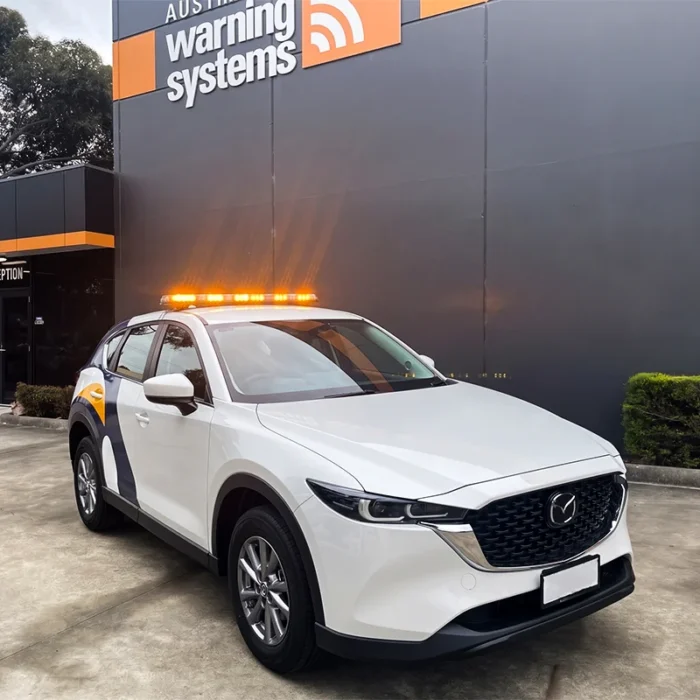
Council fleets should select warning-light configurations according to vehicle type and operational requirements.
1. Separate Your Council Fleet into Working Groups
The first mistake in fleet purchasing often happens before anyone opens a product catalogue. Procurement teams group vehicles by ownership rather than the work they perform.
A ute assigned to park inspections may stop occasionally beside a quiet suburban road. A utility maintenance vehicle may carry ladders, generators and equipment above roof height. A roadworks truck may support activities beside live traffic for an entire shift.
These vehicles need separate assessments.
| Fleet group | Typical application | Main specification question |
| Inspection utes | Signs, assets, roadside inspections | What warning arrangement suits short roadside stops? |
| Service-body vehicles | Water, drainage and infrastructure repairs | Will the body or roof equipment obstruct warning lights? |
| Road-maintenance trucks | Road repairs and maintenance operations | What warning equipment must work with the traffic-management plan? |
| Specialist support vehicles | Mobile maintenance or traffic support | What additional controls or warning devices does the role require? |
A council can still standardise products across similar vehicles. The key is defining which vehicles genuinely belong in the same group.
2. Build the Specification Around the Actual Job
A useful fleet specification describes what the warning system must do before naming a particular model.
For every vehicle group, record its normal roadside activity, typical road environment, frequency of stops and whether crews work around the vehicle.
A metropolitan council might operate mostly on residential streets. A regional council in Victoria or South Australia may also maintain roads where approaching traffic travels at higher speeds. The fleet manager should account for those differences within the approved traffic-management arrangements.
Ask whether the vehicle works mainly while stationary, moves frequently between nearby tasks or forms part of a mobile works operation. These distinctions affect the assessment and may change the equipment the vehicle requires.
This is where council vehicle LED lightbars become an equipment decision rather than a generic safety purchase.
3. Confirm State Requirements Before Selecting Equipment
A council’s internal fleet standard cannot replace applicable road and vehicle rules.
In Victoria, Transport Victoria’s VSI 12 guidance identifies road construction and maintenance vehicles working in hazardous road positions as examples of special-use vehicles that may carry yellow flashing or rotating warning lamps.
For vehicles within the scope of that guidance, at least one correctly coloured warning lamp must remain visible in normal daylight from every direction at not less than 200 metres. If one lamp cannot achieve the required visibility, additional lamps are necessary. The guidance also identifies circumstances in which road-maintenance vehicles may operate yellow warning lamps while moving.
Importantly, VSI 12 generally applies to vehicles with a gross vehicle mass of 4.5 tonnes or less. Heavier vehicles need assessment against the relevant heavy-vehicle requirements.
New South Wales roadwork operations should follow the applicable Transport for NSW traffic-control standards and approved site arrangements. These can distinguish vehicle-mounted warning lamps from flashing arrow signs and other traffic-control devices.
South Australia’s workzone standards similarly address vehicle-mounted warning devices and visibility for particular types of roadside work.
For a mixed fleet operating across states, document the requirements for each vehicle class and application instead of assuming one rule covers everything.
4. Check Warning Visibility on the Completed Vehicle
A lightbar’s catalogue specifications cannot show what happens when a council vehicle carries its normal equipment.
A roof rack may cross part of the warning signal. A tall canopy may obstruct the rear view. A service truck’s equipment can alter visibility while crews work around the vehicle.
Before buying vehicle warning light bars Australia, inspect representative vehicles with their usual accessories installed.
Review the roof and body profile, identify possible obstructions and assess the relevant approaching directions. If the assessment identifies inadequate visibility, determine whether a different mounting arrangement or supplementary warning lights are appropriate.
Do not assume that fitting a longer lightbar automatically resolves every visibility problem.
The fleet should record its findings so the installer can evaluate the proposed configuration against the vehicle’s actual dimensions and applicable visibility requirements.
5. Specify the Mounting Position and Installed Height
A roof-mounted product must suit both the vehicle and the structure supporting it.
Before choosing a lightbar, give the supplier the usable mounting area, roof type, existing accessories and any height restrictions.
A low-profile housing may help reduce installed height, but mounting feet and brackets still contribute to the final measurement. Roof curvature, body construction and cable-routing options can affect the installation.
For commercial warning light bars Australia, procurement teams should request an installation proposal that identifies the mounting hardware, attachment method, final clearance and servicing access.
Never assume that a bracket suitable for one ute will fit another model simply because the vehicles belong to the same council fleet.
6. Decide Which Lighting Functions the Vehicle Needs
Warning lights, work lights and traffic-direction devices serve different purposes.
An amber roof lightbar warns road users about a vehicle or potentially hazardous activity. Work or alley lights illuminate a particular working area. An approved flashing arrow sign provides directional traffic information where the traffic-management arrangement requires it.
These devices should not be treated as interchangeable.
A council drainage truck may need warning lighting and separate work illumination around equipment. A roadside inspection ute may need a simpler configuration. A traffic-management support vehicle may require additional equipment specified by its operational plan.
When evaluating roof mounted emergency light bar options, distinguish between functions included in the product and functions the job actually requires.
That decision helps prevent unnecessary extras while ensuring the quotation covers the complete equipment requirement.
7. Check Whether the ECCO 1200+ Suits the Vehicle Group
Australian Warning Systems offers the ECCO 1200+ Series as a low-profile warning-lightbar range for commercial and fleet applications.
The standard product page lists 1220mm, 1370mm, 1525mm and 1830mm lengths, a 64mm housing height excluding mounting feet, 12–24V operation and 48 selectable flash patterns. It also lists optional work or alley lights, controllers, mounting brackets and Safety Director functions.
These specifications make the range worth considering for suitable council vehicles, but they should not replace an application-specific assessment.
A fleet manager evaluating 1200 series led light bars Australia should confirm the exact model, colour configuration, mounting hardware, accessories and availability before issuing the order.
Review the ECCO 1200+ product specifications and compare AWS roof-mounted warning equipment as part of the procurement process.
Manufacturer-listed approvals should also be checked against the actual installation and applicable Australian requirements rather than treated as blanket approval for every council vehicle.
8. Standardise Electrical and Controller Requirements
A mixed municipal fleet may contain 12V utes, trucks with different electrical arrangements and specialist vehicles carrying several accessories.
The lightbar’s rated voltage provides only part of the answer.
The installer must assess current draw, circuit protection, cable routing, switching, controller compatibility and accessory loads. Procurement teams should also specify how drivers operate the warning system and how workshops identify faults.
A consistent controller layout can simplify driver familiarisation, while documented wiring makes future servicing more predictable.
The fleet should standardise these requirements where practical without forcing incompatible electrical components into different vehicles.
9. Evaluate Quotes on Installed Value, Not Unit Price
Imagine two suppliers offer similar-looking amber lightbars. One quote includes the approved brackets, controller, fitment, testing and documentation. The other covers only the lightbar.
The lower equipment price may not represent the lower installed cost.
Compare each quotation against the same specification, including:
- Exact model, size and colour configuration.
- Required mounting hardware and controls.
- Vehicle-specific electrical installation.
- Supplementary equipment, where specified.
- Inspection, testing and handover documentation.
- Warranty terms, servicing and replacement-part support.
For larger fleets, ask suppliers to identify any variations between vehicle groups.
A clearly itemised quotation makes purchasing decisions easier to defend and reduces surprises during fitout.
10. Approve One Representative Vehicle Before Fleet Rollout
A fleet manager should avoid purchasing a large quantity before validating the proposed arrangement.
Select a representative vehicle from each group and complete a trial fitout. Check mounting, height, visibility, controller operation and integration with other equipment.
Have the responsible fleet and safety personnel review the installation against the approved specification. Record any changes before fitting subsequent vehicles.
This approval process helps prevent the same installation problem from appearing across an entire fleet.
11. Build Maintenance into the Original Purchase
Warning lighting needs ongoing attention after installation.
Fleet workshops should keep a record of the installed model, controller, wiring arrangement, brackets and any supplementary lights. Drivers should report damaged lenses, loose mounting hardware or abnormal operation through the existing vehicle inspection process.
When a council adds roof racks or changes a service body, it should review whether the modification affects warning-light visibility.
For replacement planning, standardise compatible spare parts across each fleet group where possible.
That turns the original purchase into a maintainable system rather than a collection of unrelated installations.
Request a Fleet Specification, Not Just a Lightbar Price
The strongest council warning-light purchase starts with a clear description of the vehicle and its job.
Once the fleet manager defines the work application, visibility requirements, electrical needs and installation expectations, suppliers can recommend more appropriate equipment and prepare comparable quotations.
Australian Warning Systems supplies professional vehicle warning equipment and installation services for councils, contractors and commercial fleets.
If you are reviewing council vehicle warning lights Australia, contact the AWS team with your vehicle list and operating requirements to discuss suitable warning systems, including ECCO roof-mounted options.
A good fleet quotation should explain why each configuration suits the vehicle—not simply how many lightbars the council should buy.
Frequently Asked Questions
Do all council vehicles need amber warning lights in Australia?
No single rule requires every council-owned vehicle to carry amber warning lights. Requirements depend on the vehicle’s role, applicable state rules and the activities it performs. Councils should assess vehicles by operational group rather than ownership alone.
What is the difference between a council ute lightbar and a road-maintenance truck lightbar?
The main differences involve the vehicle’s body, mounting space, electrical system, operating conditions and required warning coverage. A road-maintenance truck may also need additional equipment associated with its traffic-management role.
Can one warning lightbar model fit an entire council fleet?
Sometimes, but the fleet should verify physical fitment, mounting, electrical compatibility and warning visibility across each vehicle group before approving a standard model.
Are 12V–24V LED warning lightbars suitable for both council utes and trucks?
A 12–24V rating supports operation within the manufacturer’s specified voltage range. Installers must still confirm wiring, current draw, circuit protection, controllers and accessories for each vehicle.
Can amber roof lightbars replace flashing arrow boards at roadworks?
No. Warning lightbars and flashing arrow signs perform different functions. Where a traffic-management plan requires a flashing arrow sign or another device, a standard amber roof lightbar does not automatically replace it.
What should fleet managers include in a warning-lightbar quotation request?
Provide vehicle details, operating roles, electrical systems, mounting requirements, existing accessories, warning-light needs and applicable standards. Request an itemised installation scope, testing, documentation, warranty and servicing arrangements.