


Connected Vehicle Safety Explained: How Smart Alerts Protect Australian Roads
Introduction
Road safety is evolving. Connected vehicle safety uses digital communication between vehicles, infrastructure, networks and supported platforms to provide motorists and fleet operators with earlier awareness of hazards, emergency responses and active roadside operations. While warning lights, signs and sirens remain essential, relying on them alone may not provide the earliest possible warning to approaching motorists.
Today’s fleets are embracing connected vehicle safety, a smarter approach that combines digital communication, cloud technology and intelligent transport systems to help drivers become aware of roadside hazards before they reach them.
Whether it’s an emergency response vehicle attending an incident, a roadworks crew managing traffic, a utility team working beside live roads or a tow truck assisting a stranded motorist, connected vehicle technology helps improve communication between vehicles, fleets and road users, creating safer roads for everyone.
Across Australia and New Zealand, governments, road authorities and commercial fleet operators are increasingly investing in connected fleet safety solutions that complement existing warning systems and support better decision-making on the road.
In this guide, we’ll explain what connected vehicle safety is, how it works, why it matters and how technologies like HAAS Alert Safety Cloud are helping shape the future of roadside safety.
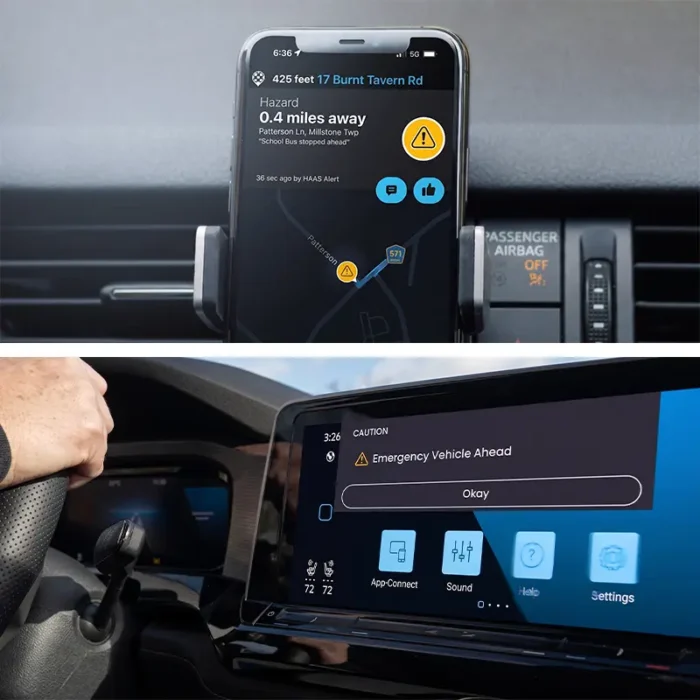
The Growing Need for Connected Vehicle Safety
Australia has one of the world’s largest road networks, with thousands of emergency responses, roadside maintenance activities and traffic management operations taking place every day.
While flashing warning lights, traffic signs and directional arrow boards remain essential safety tools, they rely on one important factor—drivers must first see them.
Unfortunately, this isn’t always possible.
Motorists may encounter situations where visibility is reduced due to:
- Heavy traffic congestion
- High-speed highways
- Night-time driving
- Poor weather conditions
- Blind corners and hills
- Driver distraction
- Busy urban environments
In many cases, drivers only recognise an emergency vehicle or roadside operation when they are already close to the scene, leaving limited time to react safely.
Connected vehicle safety helps bridge this gap by providing earlier digital awareness through supported connected technologies.
What Is Connected Vehicle Safety?
Connected vehicle safety is the use of digital communication technologies that allow vehicles, roadside infrastructure and compatible platforms to exchange important safety information in real time.
Instead of relying only on what drivers can physically see, connected systems help deliver earlier notifications about nearby hazards, emergency vehicles, roadworks and roadside operations.
This additional awareness helps motorists make safer decisions before reaching an incident.
Connected vehicle safety does not replace traditional warning equipment. Instead, it works alongside warning lights, sirens, arrow boards and traffic management devices to strengthen roadside protection.
Why Connected Vehicle Safety Is Becoming Essential
Modern transport networks require faster communication than traditional roadside warning methods alone can provide.
Road users today expect accurate, real-time information that helps them navigate changing road conditions safely.
Connected vehicle technology supports this by improving communication between:
- Emergency response vehicles
- Road authorities
- Traffic management teams
- Fleet operators
- Utility providers
- Government agencies
- Road users
The result is better situational awareness, improved driver confidence and safer roadside operations.
Traditional Road Safety vs Connected Vehicle Safety
Traditional safety systems remain the foundation of roadside protection, but connected technologies provide additional awareness beyond visual contact.
| Traditional Road Safety | Connected Vehicle Safety |
| Warning lights and sirens | Real-time digital communication |
| Drivers react after seeing hazards | Drivers receive earlier awareness |
| Physical roadside visibility | Digital notifications through supported systems |
| Localised warning | Connected fleet communication |
| Essential roadside equipment | Additional digital safety layer |
The most effective approach combines both physical and digital safety systems to provide multiple layers of protection.
Understanding Connected Vehicle Technology
At the heart of connected vehicle safety is the ability for vehicles and digital platforms to securely exchange operational information.
When authorised vehicles activate compatible warning systems, connected technology can communicate relevant event information through supported platforms, helping approaching motorists become aware of the situation sooner.
Examples include:
- Emergency response vehicles
- Roadworks operations
- Traffic management activities
- Utility maintenance
- Roadside assistance
- Tow truck recovery
- Infrastructure maintenance
Rather than replacing existing vehicle warning systems, connected technology extends their effectiveness by improving how safety information is shared.
Connected Fleet Safety for Modern Organisations
Managing fleet safety involves more than installing warning lights on vehicles.
Today’s fleet managers need technologies that improve communication, enhance driver awareness and support safer roadside operations across multiple vehicles and locations.
Connected fleet safety allows organisations to introduce intelligent communication between compatible fleet systems and participating road users.
Benefits include:
Improved Fleet Visibility
Better awareness of active roadside vehicles during emergency response and maintenance operations.
Earlier Driver Awareness
Motorists receive important information before reaching roadside activity.
Scalable Across Fleets
Suitable for emergency services, councils, utilities and commercial organisations operating fleets of any size.
Supports Existing Fleet Technology
Many connected solutions integrate with compatible fleet GPS and telematics platforms, helping organisations maximise existing technology investments.
How Connected Vehicle Safety Works
Connected vehicle safety is built on one simple objective—helping the right information reach the right people at the right time.
Rather than relying only on what drivers can physically see, connected vehicle technology allows compatible vehicles, fleet systems and digital platforms to securely exchange safety information in real time. This enables earlier awareness of emergency response vehicles, roadside hazards and temporary work zones, helping motorists make safer decisions before reaching an active incident.
For emergency services, road authorities and commercial fleets across Australia and New Zealand, this additional layer of communication complements traditional roadside warning equipment while improving overall situational awareness.
Understanding V2X Road Safety
One of the key technologies behind connected vehicle safety is V2X (Vehicle-to-Everything) communication.
V2X enables participating vehicles to exchange safety-related information with other connected systems, helping improve communication between vehicles, road infrastructure and compatible digital platforms.
Depending on the connected environment, V2X can include communication between:
- Vehicle to Vehicle (V2V)
- Vehicle to Infrastructure (V2I)
- Vehicle to Network (V2N)
- Vehicle to Pedestrian (V2P)
- Vehicle to Cloud Platforms
Together, these technologies help build safer and more intelligent transport networks.
NOTE:
Not all V2X technologies communicate in the same way. Some systems use direct short-range communication between vehicles and infrastructure, while others use cellular and cloud-based networks. HAAS Alert Safety Cloud primarily operates as a network-connected V2X digital alerting platform that distributes verified event information to supported navigation applications and compatible in-vehicle systems.
Why V2X Matters for Road Safety
Traditional roadside warning systems become effective only when drivers can see flashing lights, warning signs or traffic controllers.
V2X road safety helps extend that awareness by providing earlier digital notifications through supported connected systems.
Potential benefits include:
Earlier Hazard Awareness
Drivers receive information before reaching roadside activity.
Faster Driver Response
Earlier notifications give motorists additional time to slow down, change lanes safely where appropriate and prepare for changing traffic conditions.
Improved Roadside Worker Protection
Supports safer environments for emergency responders, roadworkers, utility crews and roadside assistance operators working near live traffic.
Smarter Traffic Movement
Better awareness helps reduce sudden braking, unexpected lane changes and driver confusion around active roadside operations.
Connected Fleet Safety Explained
Modern fleet management is no longer focused only on vehicle tracking.
Today’s organisations need technologies that improve communication, increase operational visibility and strengthen roadside safety across multiple vehicles.
Connected fleet safety combines digital communication, fleet management systems and compatible connected vehicle technology to improve awareness during active roadside operations.
Rather than replacing existing fleet systems, connected safety solutions integrate with compatible technologies to enhance the way important safety information is shared.
Benefits for Fleet Operators
Better Operational Visibility
Monitor active fleet operations while improving awareness around emergency incidents and roadside activities.
Scalable Across Fleet Sizes
Suitable for local councils, utilities, emergency services and national commercial fleets.
Supports Existing Telematics
Many connected safety platforms integrate with compatible fleet GPS and telematics solutions, helping organisations maximise existing technology investments.
Improved Driver Confidence
Earlier information allows both fleet drivers and approaching motorists to make safer decisions on the road.
How HAAS Alert Safety Cloud Supports Connected Vehicle Safety
One example of connected vehicle safety technology is HAAS Alert Safety Cloud.
The platform helps participating vehicles securely communicate their operational status when compatible warning equipment is activated, allowing supported navigation platforms and connected vehicle systems to notify approaching motorists.
This creates an additional digital layer of roadside protection while continuing to rely on existing warning lights and approved traffic control equipment.
Unlike traditional warning systems alone, HAAS Alert Safety Cloud helps improve driver awareness before motorists arrive at an active roadside operation.
HA-7 Transponder and HA-Direct Integration
Organisations can activate Safety Cloud through three primary deployment methods:
- 1. HA-7 Transponder – dedicated hardware connected to compatible warning-light circuits.
- 2. HA-Direct Integration – supported telematics or fleet-management integration.
- 3. OEM or New-Vehicle Installation – Safety Cloud may be pre-installed or specified on selected new apparatus and specialist fleet builds.
HA-7 Transponder
The HA-7 Transponder is installed directly in compatible vehicles and connects with approved warning-light systems.
When warning equipment is activated, it securely transmits vehicle location and operational status to Safety Cloud, enabling supported digital alerts.
Ideal for:
- Emergency vehicles
- Roadworks fleets
- Tow trucks
- Utility vehicles
- Council fleets
- Government vehicles
HA-Direct Integration
For organisations already using compatible fleet GPS or telematics platforms, HA-Direct Integration provides another deployment option.
Instead of installing dedicated hardware in every vehicle, compatible fleet systems can communicate with Safety Cloud, helping organisations implement connected fleet safety using their existing technology infrastructure.
Real-World Applications Across Australia & New Zealand
Connected vehicle safety supports a wide range of roadside operations where earlier driver awareness can improve safety outcomes.
Emergency Services
Police, fire and ambulance fleets can increase visibility around emergency response activities by combining traditional warning systems with connected digital alerts.
Road Authorities
Road maintenance teams and highway authorities can improve awareness around temporary traffic changes, maintenance works and roadside operations.
Traffic Management
Traffic controllers and work zone vehicles can help approaching motorists recognise lane closures and temporary traffic conditions earlier.
Local Councils
Council maintenance vehicles working on roadsides, parks and public infrastructure can benefit from improved roadside visibility.
Utility Providers
Electricity, telecommunications, gas and water maintenance crews often operate beside live traffic. Connected vehicle safety helps strengthen awareness around these temporary work areas.
Tow Trucks & Roadside Assistance
Vehicle recovery operators and roadside assistance teams can provide earlier notification to approaching motorists during breakdowns and recovery operations.
Government & Commercial Fleets
Government departments, infrastructure contractors and commercial fleet operators can introduce connected safety technologies to support safer roadside operations across large vehicle fleets.
Why Connected Vehicle Safety Is the Future of Intelligent Transport
Governments across the world continue investing in intelligent transport systems (ITS) that improve road safety through smarter communication and connected infrastructure.
Connected vehicle safety is becoming an important part of this evolution because it supports:
- Better driver awareness
- Safer emergency response
- Improved roadside worker protection
- More efficient fleet operations
- Enhanced transport network communication
- Future-ready digital road safety initiatives
As more vehicles and transport systems become connected, digital alerting technologies are expected to play an increasingly important role in improving safety across Australia and New Zealand.
Why Connected Vehicle Safety Is the Future of Road Safety
Road transport continues to evolve as vehicles, infrastructure and digital technologies become more connected. While traditional warning systems remain essential, organisations are increasingly looking for smarter ways to improve driver awareness before motorists reach an emergency scene or roadside operation.
Connected vehicle safety supports this shift by combining digital communication with existing warning equipment to create a safer roadside environment for emergency responders, maintenance crews and the travelling public.
Across Australia and New Zealand, government agencies, road authorities and commercial fleet operators are adopting connected technologies that help improve situational awareness while supporting safer transport networks.
Rather than replacing proven safety equipment, connected vehicle technology strengthens existing roadside safety practices through earlier communication and better information sharing.
Why Organisations Are Investing in Connected Fleet Safety
Roadside incidents can occur at any time and in a wide range of environments, from busy city streets to regional highways. Giving motorists more time to recognise roadside activity can help improve decision-making and reduce risks around active operations.
Organisations are increasingly adopting connected fleet safety because it provides practical operational benefits while working alongside existing fleet infrastructure.
Improve Driver Awareness
Provide earlier notifications that help motorists recognise roadside activity before reaching the scene.
Strengthen Roadside Worker Protection
Support safer environments for emergency responders, roadworks crews, utility providers and roadside assistance teams working close to live traffic.
Complement Existing Warning Systems
Connected vehicle safety works alongside warning lights, beacons, directional arrow boards and approved traffic control equipment rather than replacing them.
Scalable Across Any Fleet
Suitable for individual vehicles, regional operations or large government and commercial fleets operating across Australia and New Zealand.
Support Smarter Fleet Operations
Compatible with connected technologies that improve operational visibility and enhance communication during roadside incidents.
How HAAS Alert Safety Cloud Supports Connected Vehicle Safety
As connected transport technology continues to advance, organisations require solutions that are reliable, scalable and easy to integrate into existing fleet operations.
HAAS Alert Safety Cloud is a connected vehicle safety platform that helps participating vehicles communicate roadside activity through real-time digital alerts, providing earlier awareness for approaching motorists.
When paired with the HA-7 Transponder or compatible HA-Direct Integration, Safety Cloud works alongside existing warning systems to support:
- Earlier driver awareness
- Improved roadside worker protection
- Connected fleet communication
- Real-time digital alerting
- Smarter emergency response
- Safer roadside operations
The platform is suitable for emergency services, road authorities, councils, utilities, traffic management companies, tow operators and commercial fleet organisations throughout Australia and New Zealand.
Why Choose Australian Warning Systems?
Selecting the right connected vehicle safety solution is only part of the process. Successful implementation also requires experienced local support, professional installation and ongoing technical expertise.
As the authorised HAAS Alert Safety Cloud distributor for Australia and New Zealand, Australian Warning Systems helps organisations deploy connected fleet safety solutions with confidence.
Our team supports customers through every stage of implementation, including:
- HA-7 Transponder supply
- Professional installation
- Warning light integration
- Fleet rollout planning
- Technical support
- Australia & New Zealand coverage
Whether you’re upgrading a single emergency vehicle or implementing connected safety across an entire fleet, we work closely with organisations to deliver practical solutions that align with their operational requirements.
The Future of Connected Transport
Connected transport is becoming an important part of modern road safety strategies.
As intelligent transport systems continue to develop, technologies such as V2X communication, connected vehicle safety and real-time digital alerting will help improve communication between vehicles, roadside infrastructure and transport networks.
For fleet operators, this means better visibility.
For emergency responders, it means improved roadside protection.
For motorists, it means earlier awareness and safer journeys.
By investing in connected safety today, organisations are preparing their fleets for the future of transport across Australia and New Zealand.
Conclusion
Road safety is no longer limited to what drivers can see through the windscreen.
Connected vehicle safety is helping reshape how emergency services, road authorities and fleet operators protect roadside workers and communicate with approaching motorists.
By combining traditional warning systems with real-time digital alerting, organisations can improve driver awareness, strengthen roadside safety and support more efficient emergency response.
Whether you’re planning a connected fleet strategy or exploring digital alerting for the first time, understanding these technologies is an important step towards building safer roads for everyone.
Disclaimer
Safety Cloud availability, alert delivery platforms, vehicle compatibility, cellular coverage and service functionality may vary by country, vehicle, integration and account configuration. Organisations in Australia and New Zealand should confirm current requirements before purchase, installation or deployment.
Frequently Asked Questions
1. What is connected vehicle safety?
Connected vehicle safety uses digital communication technology to help vehicles, fleets and supported systems exchange safety information in real time. It improves driver awareness around emergency vehicles, roadworks and roadside hazards while complementing traditional warning systems.
2. How does V2X road safety work?
V2X (Vehicle-to-Everything) enables participating vehicles to communicate with other vehicles, roadside infrastructure, cloud platforms and compatible transport systems. This helps deliver earlier safety information and supports smarter traffic management.
3. What is connected fleet safety?
Connected fleet safety combines connected vehicle technology, fleet management systems and digital communication to improve operational visibility, roadside worker protection and driver awareness across commercial and government fleets.
4. How can connected vehicle technology help reduce collision risk?
Connected vehicle technology can improve situational awareness by delivering earlier information about emergency vehicles, work zones and roadside hazards. This may give drivers more time to slow down, move over or prepare for changing conditions. It does not eliminate collision risk and should complement established road-safety systems.
5. Does connected vehicle safety replace warning lights?
No. Connected vehicle safety is designed to complement existing warning lights, sirens, arrow boards and traffic control equipment by providing an additional digital layer of awareness.
6. What is HAAS Alert Safety Cloud?
HAAS Alert Safety Cloud is a cloud-based connected vehicle safety platform that delivers real-time digital alerts to supported navigation platforms and compatible vehicle systems, helping improve roadside safety.
7. What is the HA-7 Transponder?
The HA-7 Transponder is vehicle-installed hardware that connects compatible warning systems to HAAS Alert Safety Cloud, securely transmitting vehicle location and warning status during active roadside operations.
8. Is connected vehicle safety available in Australia and New Zealand?
Yes. Australian Warning Systems supplies and supports HAAS Alert Safety Cloud and connected vehicle safety solutions for organisations across Australia and New Zealand.