


Are Towing Mirrors Required for Caravans in Australia? Safety & Legal Guide
Are towing mirrors required by law in Australia?
The short answer is: it depends on visibility — not brand, not vehicle type, and not caravan size alone.
Australian road rules focus on clear rearward vision. If your factory mirrors do not provide adequate visibility past your caravan or trailer, then towing mirrors Australia regulations require you to fit extended mirrors.
This guide explains the legal requirements for caravan towing mirrors, how towing mirror laws Australia are applied in real-world scenarios, and why properly fitted 4×4 towing mirrors are considered a safety essential for caravanners, tradies, and fleet operators.
👉 Supporting guide:
Towing Mirrors & Visibility for Caravans in Australia: Safety, Fitment & Legal Guide (2025)
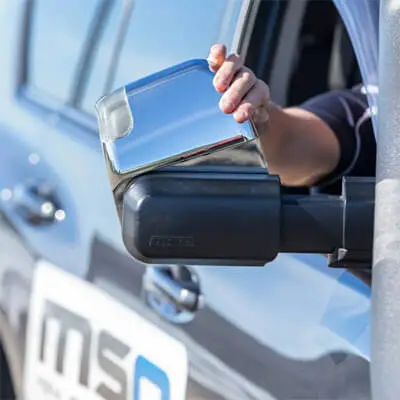
Why This Question Matters in Australia
Australia’s towing conditions are different from many other countries.
- Long highway distances
- High-speed overtaking
- Large caravans and trailers
- Road trains and heavy vehicles
- Wildlife hazards
Without proper visibility, towing becomes risky. Poor rearward vision increases the likelihood of:
- Unsafe lane changes
- Sideswipes
- Trailer sway incidents
- Driver fatigue
That’s why towing mirror visibility requirements in Australia focus on safety outcomes, not optional accessories.
Are Towing Mirrors Legally Required in Australia?
There is no single nationwide rule that says:
❌ “You must use towing mirrors.”
Instead, Australian road laws require that:
The driver must have a clear view of the road behind and to the sides of the vehicle at all times.
If your standard mirrors do not provide adequate visibility when towing a caravan or trailer, then towing mirrors are legally required to meet this requirement.
This applies across:
- All Australian states and territories
- Private 4WD and ute vehicles
- Commercial and fleet vehicles
- Caravans, trailers, boats and horse floats
If your factory mirrors cannot see past the caravan body, then extended towing mirrors Australia compliance standards must be met.
The Legal Principle That Applies Nationwide
Across Australia, road authorities apply a consistent principle:
✅ If your caravan or trailer:
- Is wider than your vehicle
- Blocks rearward vision
- Obstructs lane visibility
❌ And your factory mirrors:
- Do not provide a clear view past the caravan
Then you must fit ADR compliant towing mirrors or other extended mirror solutions that restore proper visibility.
The law focuses on visibility outcome — not mirror brand.
How Police and Inspectors Assess Towing Mirror Compliance
In practice, enforcement officers assess:
- Can you see past the caravan body?
- Can you monitor adjacent lanes?
- Can you safely overtake or merge?
- Are blind spots minimised?
If visibility is inadequate, you may be:
- Issued a defect notice
- Required to fit towing mirrors before continuing
- Found at fault in the event of an incident
This is why most experienced caravanners install caravan towing mirrors Australia wide, even before being required to.
Do All Caravans Require Towing Mirrors?
Not necessarily — but most do.
Towing mirrors are usually required when:
- The caravan is wider than the tow vehicle
- The caravan blocks rear side vision
- The vehicle’s mirrors sit inside the caravan’s width
Towing mirrors may not be required when:
- The trailer is narrow
- The caravan sits fully within mirror visibility
- The driver can clearly see past the trailer body
In reality, most full-size touring caravans require extendable towing mirrors to meet legal and safety standards.
State-by-State Enforcement (What Actually Happens)
Although legislation wording varies slightly between states, enforcement is consistent:
New South Wales
Visibility must be sufficient to safely monitor traffic behind and beside the vehicle.
Victoria
Drivers must have an unobstructed rearward view; extended mirrors are required if standard mirrors are blocked.
Queensland
Clear vision past the caravan is mandatory for safe towing.
Western Australia, SA, NT, TAS
The same principle applies — adequate visibility must be maintained.
There is no Australian state where restricted visibility is permitted.
Are Clip-On Towing Mirrors Legal?
Yes, if they are secure and provide proper visibility.
However, poorly fitted clip-on mirrors may:
- Vibrate excessively
- Shift position
- Reduce clarity
This can result in:
- Reduced effectiveness
- Potential compliance issues
This is why many drivers upgrade to vehicle-specific heavy duty towing mirrors such as Clearview towing mirrors or MSA towing mirrors, particularly for regular caravan travel.
👉 Related guide:
Clearview vs MSA Towing Mirrors: What’s the Difference?
What Makes a Towing Mirror “Legal”?
A towing mirror is considered compliant when it:
- Is securely mounted
- Does not interfere with steering or controls
- Provides a clear, stable view
- Allows the driver to monitor adjacent lanes
There is no requirement for:
- A specific brand
- A specific extension style
- Electric adjustment
Compliance is based on function and safety.
Why Towing Mirrors Improve Safety (Beyond Legal Requirements)
Even when not strictly required, towing mirrors Australia wide are considered best practice because they:
- Lane change confidence
- Overtaking awareness
- Reversing accuracy
- Driver comfort on long trips
On long highway runs such as the Stuart Highway, Eyre Highway or Hume Freeway extended visibility significantly improves driver comfort.
Insurance & Liability Considerations
In the event of an accident while towing:
- Investigators assess vehicle compliance
- Visibility limitations are considered
- Lack of adequate mirrors may impact liability
While insurers don’t mandate specific brands, failure to meet towing mirror legal requirements Australia standards can complicate claims.
Common Myths About Towing Mirror Laws
❌ “My caravan dealer didn’t mention mirrors”
✔ Dealers don’t determine legal responsibility — drivers do.
❌ “Clip-ons aren’t legal”
✔ They are legal if fitted correctly and stable.
❌ “Only big caravans need mirrors”
✔ Any trailer that blocks vision may require mirrors.
When Are Towing Mirrors Absolutely Essential?
Towing mirrors should always be used when:
- Towing full-width caravans
- Driving on highways
- Overtaking heavy vehicles
- Driving at night
- Driving in high-wind conditions
In these situations, extended mirrors are both a legal safeguard and a safety upgrade.
Installation & Fitment Matters
A towing mirror that is:
- Poorly installed
- Incorrectly aligned
- Loosely fitted
may still fail to provide adequate visibility.
For vehicles with electronics, indicators or integrated features, professional installation ensures compliance and stability.
👉 Internal link:
Professional installation services
Final Answer: Are Towing Mirrors Required in Australia?
✔ Yes — when standard mirrors do not provide sufficient visibility.
Australian law requires:
- Clear rearward and side vision
- Safe monitoring of traffic
- Reduced blind spots
If your caravan blocks that view, towing mirrors are legally required in Australia, regardless of vehicle type.
Whether you choose extendable towing mirrors, heavy duty towing mirrors, or vehicle-specific 4×4 towing mirrors Australia, the goal is simple:
Better visibility means safer towing.
Next Step
If you’re unsure which mirrors suit your vehicle or caravan:
👉 Explore towing mirrors and visibility solutions
👉 Read vehicle-specific towing mirror fitment guides