


Your tow truck has an amber warning light. But when you’re recovering a broken-down vehicle beside a busy highway, is that single light enough for the way your truck actually operates?
Picture a tilt-tray truck loading a vehicle on the shoulder of a regional road. The cab-mounted lightbar remains visible from the front, but the raised tray and recovered vehicle change what approaching motorists see from behind. The driver still needs enough lighting to inspect the loading area.
That creates three separate equipment questions: What warns approaching traffic? What remains visible around the truck? And what illuminates the recovery work?
For operators comparing tow truck warning lights Australia, these questions should determine whether a beacon, roof lightbar or combined warning arrangement suits the vehicle.
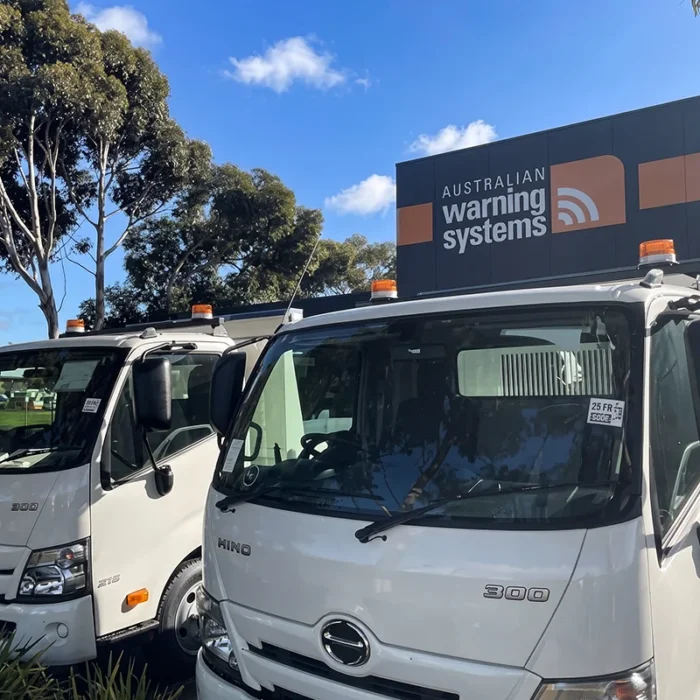
Amber warning-light selection should account for the tow truck, recovery equipment and roadside operating conditions.
One Recovery Truck, Three Different Operating Conditions
A tow truck rarely performs every job in the same position.
During roadside assistance, it may stop briefly behind a disabled car. During a tilt-tray recovery, it may remain stationary with its tray extended. During heavy recovery, its equipment and the vehicle being recovered may create additional obstructions.
A warning system that suits one situation may need further assessment for another.
Take a recovery company operating in metropolitan Melbourne and regional Victoria. Its trucks might attend suburban breakdowns, freeway incidents and vehicle collections from private premises. Each job changes the surrounding traffic, available space and working conditions.
Before selecting equipment, operators should identify their most demanding normal recovery scenario rather than buying solely for everyday driving.
Amber Beacon vs Roof Lightbar: Which Should You Choose?
The most practical comparison begins with mounting space, visibility and the functions required.
An amber beacon provides a compact warning unit. A full-width LED lightbar spreads warning modules across a larger roof assembly and may offer additional lighting and controller options.
However, physical size does not automatically establish warning performance. Optical design, installation height, positioning and vehicle obstructions influence how approaching drivers see either system.
| Buying consideration | Amber beacon | Roof-mounted LED lightbar |
| Roof space | Compact mounting footprint | Requires more usable mounting area |
| Equipment options | Vary by model | May offer multiple zones and extra functions |
| Installation | Depends on mount and wiring | Needs suitable brackets, routing and controls |
| Visibility | Must be assessed on the vehicle | Must also be assessed on the vehicle |
| Typical buying question | Will a compact unit satisfy the requirement? | Does the truck need a wider integrated system? |
An amber beacon may suit a vehicle where mounting space is limited and the installed warning arrangement meets the relevant requirements. A roof lightbar may better suit a fleet seeking a particular integrated configuration.
Neither deserves an automatic recommendation without checking the truck.
When Might a Tow Truck Need Both?
A lightbar and beacon can form part of the same warning arrangement when the vehicle’s design or operating configuration creates a genuine visibility need.
Consider a large service-body recovery truck. A primary roof lightbar might provide a prominent warning signal from the front, while bodywork blocks part of its view from a different approach.
A supplementary beacon could be one possible solution, but only after the operator and installer assess the obstruction, mounting position and applicable rules.
Do not add another flashing device simply to increase the number of lights. A second unit needs a purpose, and the installation should avoid distracting or confusing other road users.
The correct buying question is whether the combined system improves the required warning coverage on that particular vehicle.
Tilt-Tray, Wheel-Lift and Heavy Recovery: Different Equipment Decisions
A fleet may operate several recovery types, each with different visibility considerations.
Tilt-tray trucks carry a moving tray and load vehicles behind the cab. Operators should assess whether the raised tray or recovered vehicle changes visibility from the rear and rear-quarter approaches.
Wheel-lift recovery trucks may carry different towing equipment and operate with a recovered vehicle extending behind the truck. The warning assessment should consider both the truck and its normal recovery arrangement.
Heavy recovery vehicles can carry larger bodies, booms, storage compartments and additional equipment. A roof-mounted warning system may need evaluation from more approach angles because of those structures.
The recommendation is not automatically different hardware for every truck. It is a separate fitment assessment for each recovery-vehicle group.
Loading Lights Are Not the Same as Warning Lights
This distinction matters most during night recovery.
Amber warning lights alert road users to the vehicle’s presence. Loading lights help the operator see the tray, vehicle position, winch connection and working area.
A powerful roof lightbar does not necessarily provide suitable task illumination. Its warning optics and flash patterns serve a different purpose.
New South Wales makes this distinction explicit. NSW Government guidance requires relevant tow trucks to carry a working amber flashing or rotating warning light and fully adjustable mounted lights for loading and unloading vehicles during darkness.
That means operators should assess both systems when preparing a purchase specification.
Some LED lightbars offer integrated work or alley lights. These may provide useful additional illumination, but buyers must confirm whether their position and function satisfy the truck’s actual loading requirements.
Do not assume that an optional work-light feature replaces separate mounted loading lights required for a particular vehicle.
What Do NSW, Victoria and South Australia Require?
Tow truck lighting rules and roadside passing-speed requirements differ by jurisdiction.
New South Wales
NSW Government guidance requires relevant tow trucks to have an operational amber flashing or rotating warning light and fully adjustable mounted loading lights for work during darkness.
Operators must maintain that equipment in working order. The requirements make it important to check the complete recovery setup rather than focusing only on roof-mounted warning lights.
Victoria
Transport Victoria identifies tow trucks and breakdown-service vehicles as special-use vehicles that may carry yellow flashing or rotating warning lamps.
Its published vehicle lighting guidance includes mounting and visibility conditions for vehicles within its scope. Heavy vehicles need assessment against applicable heavy-vehicle standards.
Victoria also requires passing drivers to slow to 40 km/h around qualifying stationary or very slow-moving towing and roadside-assistance vehicles displaying flashing lights or sounding an alarm.
South Australia
Since 19 May 2025, South Australia has required drivers to reduce their speed to 25 km/h when passing qualifying stationary breakdown-service vehicles displaying flashing amber lights.
That includes tow trucks providing roadside assistance, subject to the rule’s conditions and exclusions.
These different requirements reinforce why an Australian recovery operator should check the rules applying to each vehicle and operating location.
Check the Roof Before Choosing a Low-Profile Lightbar
A lightbar may look compact in a catalogue and still create an installation problem on the truck.
Before ordering commercial warning light bars Australia, measure the available roof area and review existing aerials, air deflectors, racks and other mounted equipment.
Check the final installed height, not just the housing dimensions. Mounting feet and brackets can change the clearance.
Also consider whether the cab or body shape will obstruct the lightbar from any relevant direction.
For operators comparing high-visibility emergency light bar options, proper placement and verified warning coverage matter more than a marketing description of brightness.
Is the ECCO 1200+ Suitable for Your Tow Truck?
The ECCO 1200+ Series offers a low-profile warning-lightbar option for commercial vehicle applications.
Australian Warning Systems lists standard lengths of 1220mm, 1370mm, 1525mm and 1830mm, a 64mm housing height excluding mounting feet, 12–24V operation and 48 selectable flash patterns.
Available options include mounting brackets, work or alley lights and controller configurations.
These features make the series worth assessing for appropriate recovery vehicles. They do not mean every truck needs the same model or that every option suits every installation.
Before choosing an ECCO 1200+ LED light bar Australia configuration, confirm the exact model, mounting arrangement, operating voltage and required accessories.
Review the ECCO 1200+ range or compare AWS amber beacons to identify suitable equipment for further assessment.
Electrical Compatibility and Daily Reliability
Recovery fleets may include different truck electrical systems. A lightbar rated for 12–24V operation still requires correct wiring, switching, circuit protection and controller integration.
A professional installer should confirm the complete electrical requirements, particularly where the truck also carries loading lights, recovery equipment and other powered accessories.
Reliability also depends on routine inspection. Before a shift, operators should check warning-light operation, accessible mounting hardware and lens condition. They should inspect loading lights separately where required.
After replacing roof equipment or modifying the body, reassess whether anything obstructs the warning signal.
Keep installation records and model details available so technicians can identify components when faults occur.
What Should a Recovery Fleet Include in Its Equipment Quote?
A quotation becomes more useful when the supplier knows what the truck does.
Provide the vehicle make and model, year, roof arrangement, voltage and recovery type. Explain whether it performs tilt-tray, wheel-lift, heavy recovery or roadside-assistance work.
Include photographs of the normal equipment layout and describe any existing warning or loading lights.
Ask suppliers to identify the proposed product, mounting hardware, controller, electrical installation and any supplementary equipment separately.
For mixed fleets, request a recommendation for each vehicle group rather than a price for identical lightbars across every truck.
This approach helps buyers compare complete installed solutions and avoids discovering missing equipment after delivery.
Choose the Warning Setup Around the Recovery Job
The right tow truck amber lightbar Australia operators select should suit the vehicle’s real operating conditions.
A compact beacon may be suitable for one recovery vehicle. Another may benefit from a roof-mounted LED lightbar or a coordinated combination of warning devices. Neither configuration replaces a proper assessment of loading illumination, vehicle visibility and applicable road rules.
Australian Warning Systems supplies amber beacons, LED warning lightbars and vehicle warning-system installation services.
For a single truck or a larger recovery fleet, contact the AWS team with your vehicle details and operating requirements to discuss an appropriate setup.
Choose a system that makes sense for the whole recovery operation, not just the roof of the truck.
Frequently Asked Questions
Does every tow truck need an amber warning light in Australia?
Requirements depend on the state, vehicle classification and operation. NSW requires relevant tow trucks to carry a working amber flashing or rotating warning light. Operators elsewhere should confirm the applicable vehicle and towing requirements.
Is an amber beacon enough, or should I install a roof lightbar?
Either may suit a particular vehicle if the installation meets the relevant requirements. The decision depends on warning visibility, mounting space, vehicle configuration and operating conditions rather than the assumption that a larger lightbar is always better.
Can a tow truck use both an amber beacon and a lightbar?
A combined arrangement may be appropriate where the vehicle has an identified warning-visibility requirement and the configuration complies with applicable rules. Assess the complete installation before adding supplementary devices.
Do tow trucks need loading lights at night?
NSW requires relevant tow trucks to have fully adjustable mounted lights for loading and unloading motor vehicles during darkness. Operators in other jurisdictions should confirm the requirements applying to their vehicles.
Can tow trucks use red or blue warning lights?
Do not assume so. Australian jurisdictions restrict red and blue warning lighting to particular authorised vehicles and functions. Tow truck operators should verify their legal authority before selecting restricted-colour equipment.
Can I use a 12–24V lightbar on any tow truck?
Not automatically. The lightbar’s voltage rating must match the electrical supply, but the installer must also check current draw, wiring, circuit protection, mounting, controllers and accessories.